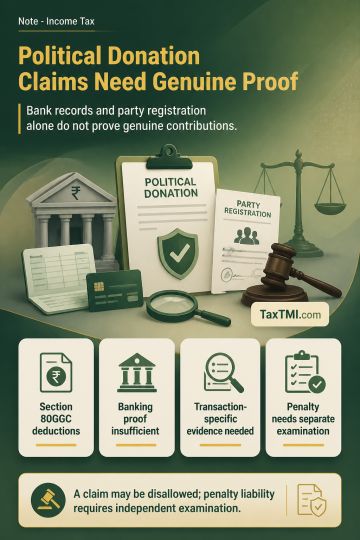
Political contribution deductions require genuine transactions; banking records and party registration alone cannot defeat evidence of accommodation e...
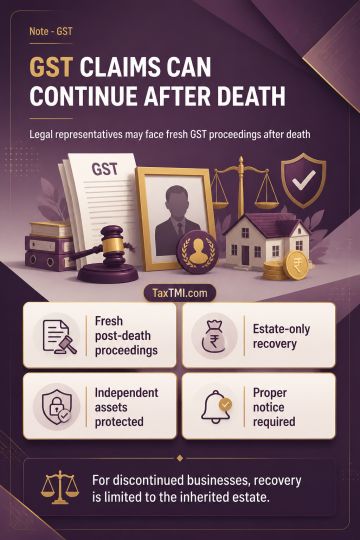
Post-death GST liability permits fresh proceedings against legal representatives, while discontinued-business recovery remains limited to the inherite...
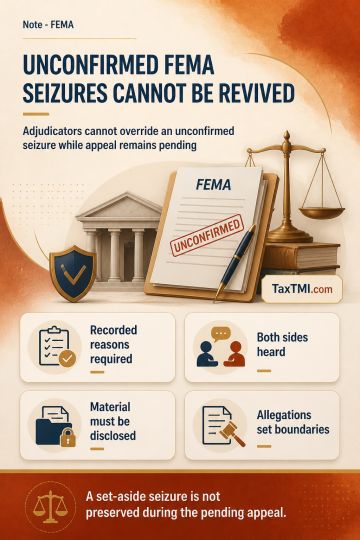
Non-confirmation of FEMA seizure prevents adjudicators from overriding pending appellate findings on recorded reasons and suspected foreign asset hold...
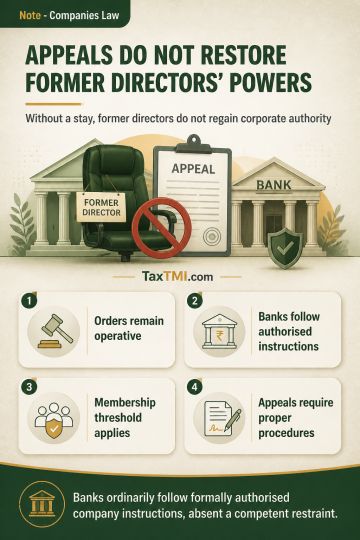
The NCLAT dismissed a recall application, confirming that the Appellate Tribunal's power of recall is limited to exceptional circumstances as established in Union Bank of India case. The Tribunal held that a director who resigned after filing a petition on behalf of the corporate debtor cannot maintain the appeal, as their resignation nullified their capacity to represent the corporate debtor. Furthermore, a shareholder cannot be substituted in place of the suspended director due to their statutorily distinct status. The Tribunal emphasized that recall applications under Section 151 of CPC are not universally maintainable before Appellate Tribunals. Consequently, the recall application was deemed misconceived and dismissed, with the original order of 14.10.2024 confirmed.
The NCLAT dismissed a recall application, confirming that the Appellate Tribunal's power of recall is limited to exceptional circumstances as established in Union Bank of India case. The Tribunal held that a director who resigned after filing a petition on behalf of the corporate debtor cannot maintain the appeal, as their resignation nullified their capacity to represent the corporate debtor. Furthermore, a shareholder cannot be substituted in place of the suspended director due to their statutorily distinct status. The Tribunal emphasized that recall applications under Section 151 of CPC are not universally maintainable before Appellate Tribunals. Consequently, the recall application was deemed misconceived and dismissed, with the original order of 14.10.2024 confirmed.
Note: It is a system-generated summary and is for quick reference only.
 TaxTMI
  TaxTMI