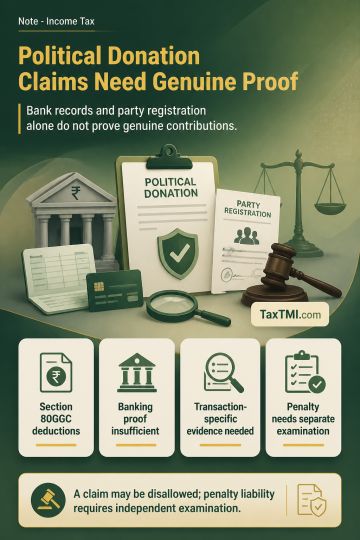
Political contribution deductions require genuine transactions; banking records and party registration alone cannot defeat evidence of accommodation e...
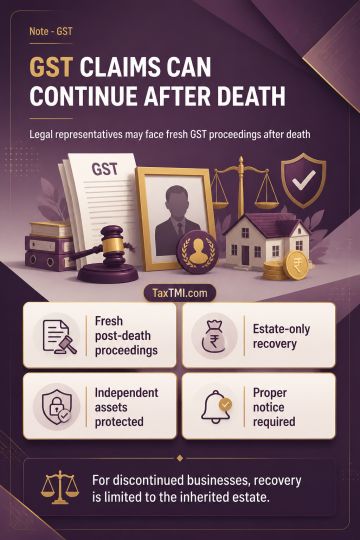
Post-death GST liability permits fresh proceedings against legal representatives, while discontinued-business recovery remains limited to the inherite...
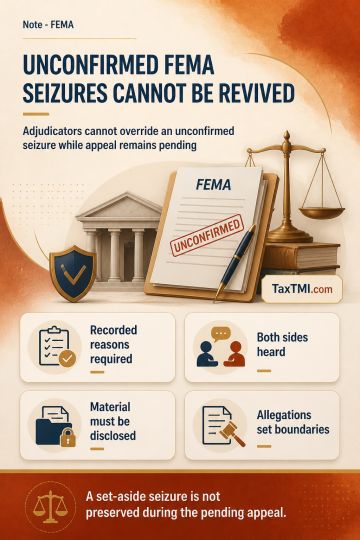
Non-confirmation of FEMA seizure prevents adjudicators from overriding pending appellate findings on recorded reasons and suspected foreign asset hold...
The Tri determined that a liquidator is only entitled to fees for realization and distribution when they have actually performed these functions, per Regulation 4(2)(b) of IBBI (Liquidation Process) Regulations, 2016. In this case, the Respondent Banks conducted the sale of the Panagarh Unit independently, with no involvement from the liquidator in the realization or distribution process. Consequently, the liquidator's claim for fees related to this sale was deemed not payable. The Tri distinguished this case from Shikshak Sahakari Bank Ltd., noting that while secured creditors must contribute to CIRP and liquidation costs under Regulation 21A(2)(a), this obligation does not extend to paying the liquidator's fees for processes in which they had no participation.
The Tri determined that a liquidator is only entitled to fees for realization and distribution when they have actually performed these functions, per Regulation 4(2)(b) of IBBI (Liquidation Process) Regulations, 2016. In this case, the Respondent Banks conducted the sale of the Panagarh Unit independently, with no involvement from the liquidator in the realization or distribution process. Consequently, the liquidator's claim for fees related to this sale was deemed not payable. The Tri distinguished this case from Shikshak Sahakari Bank Ltd., noting that while secured creditors must contribute to CIRP and liquidation costs under Regulation 21A(2)(a), this obligation does not extend to paying the liquidator's fees for processes in which they had no participation.
Note: It is a system-generated summary and is for quick reference only.
 TaxTMI
  TaxTMI