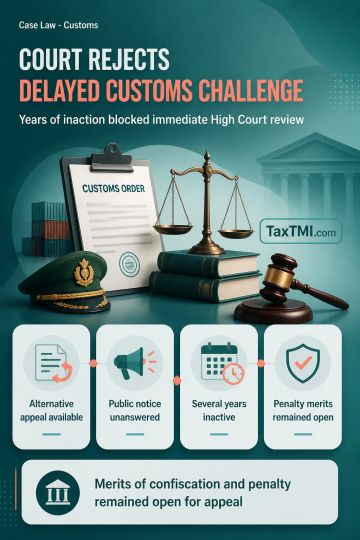
Alternative statutory remedy and unexplained delay barred writ review of customs confiscation adjudication, leaving merits for appellate consideration...
Authorised courier due diligence protects against penalties where declared exports conceal prohibited goods despite proper documentation and customs p...
Customs-controlled container movement now extends to DP World facilities, subject to segregation, inspections, reconciliation, and EXIM cargo priority...
The CESTAT dismissed an appeal for non-prosecution under Rule 20 of CESTAT Procedure Rules, 1982, after multiple adjournments exceeded the statutory maximum of three. Citing Ishwar lal Mali Rathod [2021], where the Supreme Court condemned the practice of mechanical adjournments, the Tribunal noted that appellant had misused judicial grace by repeatedly seeking postponements. The Court emphasized that granting adjournments beyond the statutory limit lacks justification, particularly when parties fail to utilize previously granted opportunities for presenting their case. This ruling reinforces judicial efficiency principles and discourages dilatory tactics in tribunal proceedings.
The CESTAT dismissed an appeal for non-prosecution under Rule 20 of CESTAT Procedure Rules, 1982, after multiple adjournments exceeded the statutory maximum of three. Citing Ishwar lal Mali Rathod [2021], where the Supreme Court condemned the practice of mechanical adjournments, the Tribunal noted that appellant had misused judicial grace by repeatedly seeking postponements. The Court emphasized that granting adjournments beyond the statutory limit lacks justification, particularly when parties fail to utilize previously granted opportunities for presenting their case. This ruling reinforces judicial efficiency principles and discourages dilatory tactics in tribunal proceedings.
Note: It is a system-generated summary and is for quick reference only.
 TaxTMI
  TaxTMI
 of 4828




















 Join Channel


