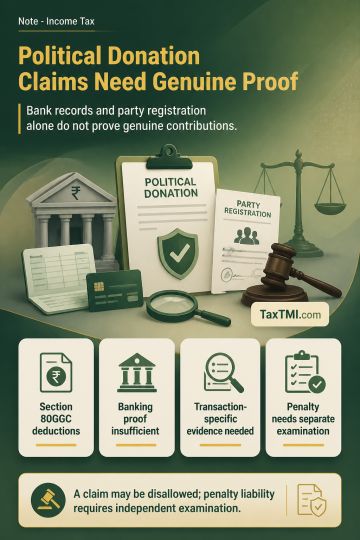
Political contribution deductions require genuine transactions; banking records and party registration alone cannot defeat evidence of accommodation e...
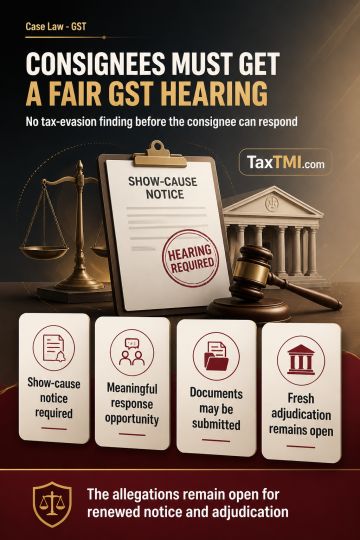
Post-death GST liability permits fresh proceedings against legal representatives, while discontinued-business recovery remains limited to the inherite...
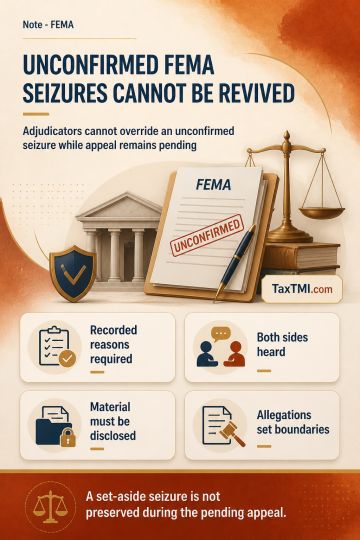
Non-confirmation of FEMA seizure prevents adjudicators from overriding pending appellate findings on recorded reasons and suspected foreign asset hold...
The CESTAT dismissed an appeal for non-prosecution under Rule 20 of CESTAT Procedure Rules, 1982, after multiple adjournments exceeded the statutory maximum of three. Citing Ishwar lal Mali Rathod [2021], where the Supreme Court condemned the practice of mechanical adjournments, the Tribunal noted that appellant had misused judicial grace by repeatedly seeking postponements. The Court emphasized that granting adjournments beyond the statutory limit lacks justification, particularly when parties fail to utilize previously granted opportunities for presenting their case. This ruling reinforces judicial efficiency principles and discourages dilatory tactics in tribunal proceedings.
The CESTAT dismissed an appeal for non-prosecution under Rule 20 of CESTAT Procedure Rules, 1982, after multiple adjournments exceeded the statutory maximum of three. Citing Ishwar lal Mali Rathod [2021], where the Supreme Court condemned the practice of mechanical adjournments, the Tribunal noted that appellant had misused judicial grace by repeatedly seeking postponements. The Court emphasized that granting adjournments beyond the statutory limit lacks justification, particularly when parties fail to utilize previously granted opportunities for presenting their case. This ruling reinforces judicial efficiency principles and discourages dilatory tactics in tribunal proceedings.
Note: It is a system-generated summary and is for quick reference only.
 TaxTMI
  TaxTMI