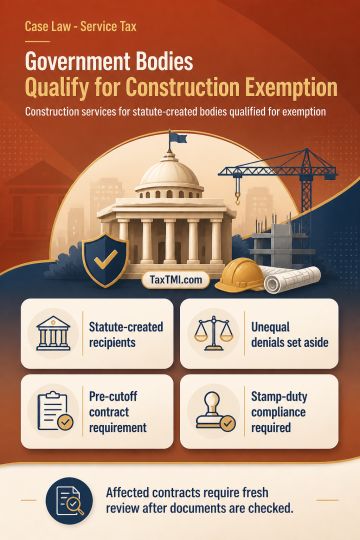
Governmental authority status supports construction-service exemption, while pre-cutoff contract and stamp-duty compliance requires verification on re...
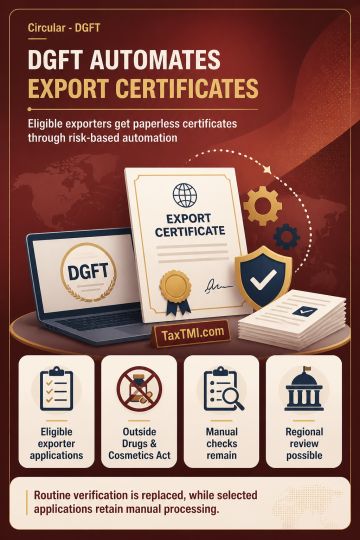
Automated Free Sale and Commerce Certificates enable paperless processing while retaining risk-based manual verification for selected exporter applica...
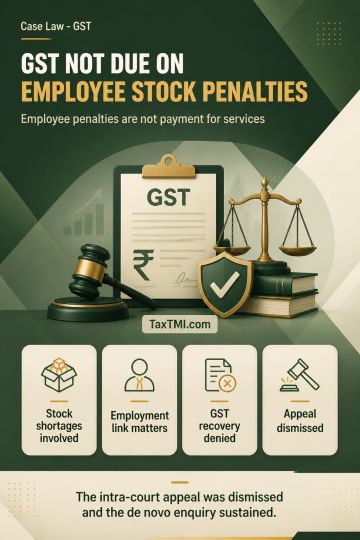
Employee stock-shortage penalties do not constitute consideration for services, preventing GST collection under Schedule II in employment relationship...
In a case under Section 138 of the N.I. Act against partners of a firm, the HC held that compounding of the offense by one partner discharges the entire liability of the partnership firm and all partners. The court emphasized that while a firm is not a legal entity separate from its partners, Section 141 of the N.I. Act allows prosecution in the firm's name. Partners' liability is joint and several, meaning each partner is liable for the entire debt individually and collectively. The court rejected partial settlement with one partner, ruling that once a matter is compromised for any amount, the offense is compounded toward all existing liabilities of the firm. Consequently, the complaint was quashed as compounded and the petitioner was acquitted.
In a case under Section 138 of the N.I. Act against partners of a firm, the HC held that compounding of the offense by one partner discharges the entire liability of the partnership firm and all partners. The court emphasized that while a firm is not a legal entity separate from its partners, Section 141 of the N.I. Act allows prosecution in the firm's name. Partners' liability is joint and several, meaning each partner is liable for the entire debt individually and collectively. The court rejected partial settlement with one partner, ruling that once a matter is compromised for any amount, the offense is compounded toward all existing liabilities of the firm. Consequently, the complaint was quashed as compounded and the petitioner was acquitted.
Note: It is a system-generated summary and is for quick reference only.
 TaxTMI
  TaxTMI
 of 4828






 Join Channel


