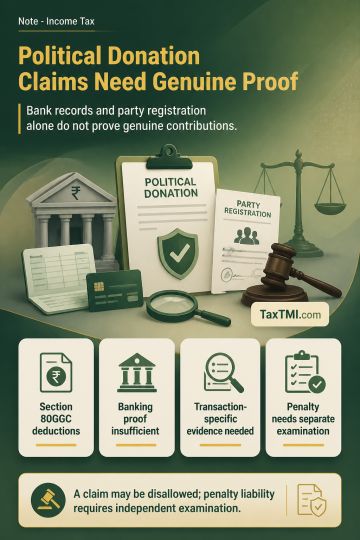
Political contribution deductions require genuine transactions; banking records and party registration alone cannot defeat evidence of accommodation e...
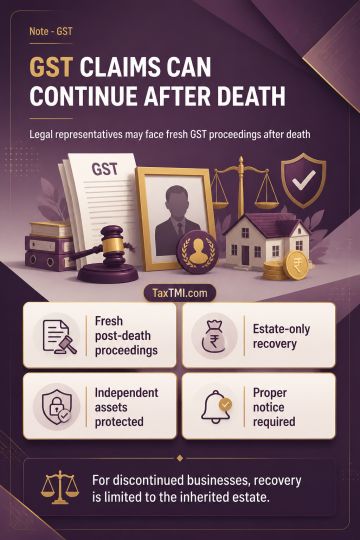
Post-death GST liability permits fresh proceedings against legal representatives, while discontinued-business recovery remains limited to the inherite...
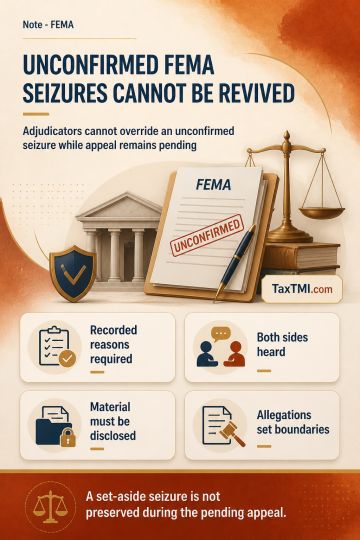
Non-confirmation of FEMA seizure prevents adjudicators from overriding pending appellate findings on recorded reasons and suspected foreign asset hold...
SC held that the agreement to sell constituted a conveyance under Explanation I to Article 25 of Schedule I of Bombay Stamp Act, requiring full stamp duty payment. Despite the property being occupied on rental basis, the agreement's clause regarding possession transfer satisfied requirements for treating it as a conveyance. The appellant's possession, evidenced by pending litigation for specific performance and eviction, established liability for stamp duty. The Court upheld lower courts' orders to recover deficit duty and penalty, with the provision that any previously paid stamp duty would be deducted from future sale deed duty calculations. The appeal was dismissed, affirming that possession, whether current or promised, triggers stamp duty obligation.
SC held that the agreement to sell constituted a conveyance under Explanation I to Article 25 of Schedule I of Bombay Stamp Act, requiring full stamp duty payment. Despite the property being occupied on rental basis, the agreement's clause regarding possession transfer satisfied requirements for treating it as a conveyance. The appellant's possession, evidenced by pending litigation for specific performance and eviction, established liability for stamp duty. The Court upheld lower courts' orders to recover deficit duty and penalty, with the provision that any previously paid stamp duty would be deducted from future sale deed duty calculations. The appeal was dismissed, affirming that possession, whether current or promised, triggers stamp duty obligation.
Note: It is a system-generated summary and is for quick reference only.
 TaxTMI
  TaxTMI