TNMM functional comparability requires excluding rice manufacturers from a pure Basmati rice trader's benchmark and recognising operating export recei...
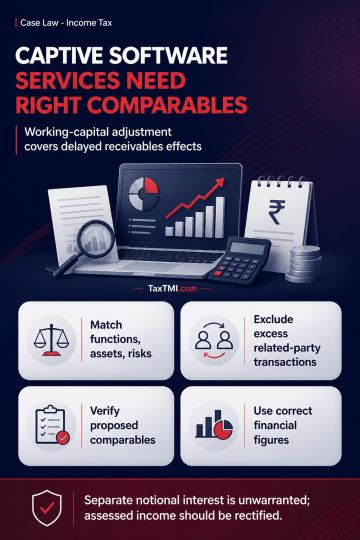
Working-capital adjustment subsumes delayed-receivable effects in TNMM benchmarking of captive software-development services, avoiding separate notion...
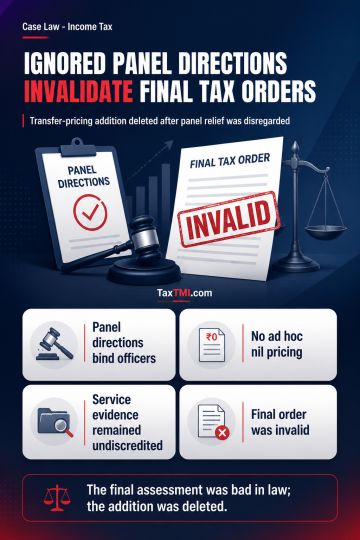
Transfer-pricing comparability requires exclusion of financially illogical super-profit comparables and correction of unsupported annual-report and ma...
Charitable character assessment preserves Section 80G approval despite inclusive spiritual teachings and incidental religious expenditure within the s...
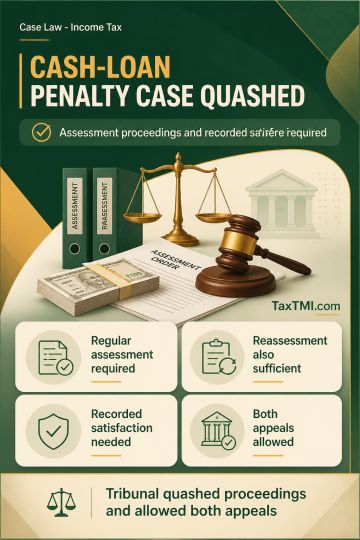
Penalty proceedings for cash-loan acceptance require assessment proceedings and recorded Assessing Officer satisfaction; absent these, the proceedings...
Functional comparability governs software-service benchmarking: dissimilar companies are excluded, while related-party filters, margins and working-ca...
NCLAT dismissed appeal concerning operational creditor's Section 9 application under IBC. Court held that while Section 8 notice is mandatory prerequisite for filing Section 9 application, corporate debtor's failure to respond to Section 8 notice does not preclude them from contesting subsequent Section 9 proceedings. Operational creditor must deliver demand notice with invoice per Form 3, allowing corporate debtor 10 days to respond regarding disputes or prior payments. However, Section 8 and Section 9 serve distinct purposes - Section 8 establishes procedural requirement for operational creditor, while Section 9 provides corporate debtor full rights to defend against insolvency proceedings regardless of earlier response to Section 8 notice. Corporate debtor retains right to raise defenses during Section 9 proceedings despite non-reply to Section 8 notice.
NCLAT dismissed appeal concerning operational creditor's Section 9 application under IBC. Court held that while Section 8 notice is mandatory prerequisite for filing Section 9 application, corporate debtor's failure to respond to Section 8 notice does not preclude them from contesting subsequent Section 9 proceedings. Operational creditor must deliver demand notice with invoice per Form 3, allowing corporate debtor 10 days to respond regarding disputes or prior payments. However, Section 8 and Section 9 serve distinct purposes - Section 8 establishes procedural requirement for operational creditor, while Section 9 provides corporate debtor full rights to defend against insolvency proceedings regardless of earlier response to Section 8 notice. Corporate debtor retains right to raise defenses during Section 9 proceedings despite non-reply to Section 8 notice.
Note: It is a system-generated summary and is for quick reference only.
 TaxTMI
  TaxTMI
 of 4830














 Join Channel


