Transaction value cannot be rejected solely on non-statutory valuation guidelines without corroborative evidence supporting reassessment of final cust...
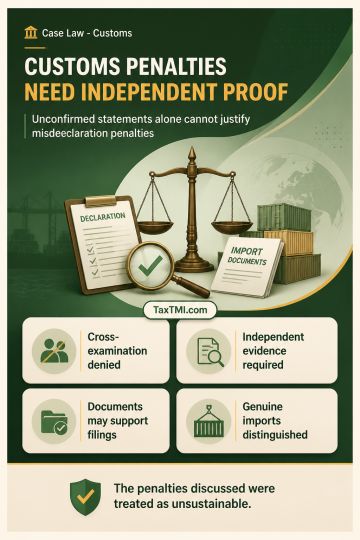
Cross-examination rights and corroborated evidence limit customs penalties for misdeclaration in genuine import transactions involving documented clea...
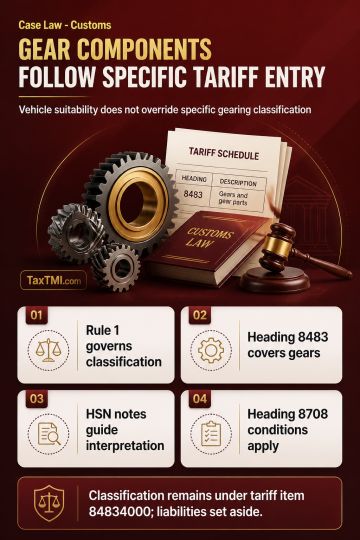
Tariff classification of vehicle gear components follows the specific gearing entry, displacing motor-vehicle parts classification and related liabili...
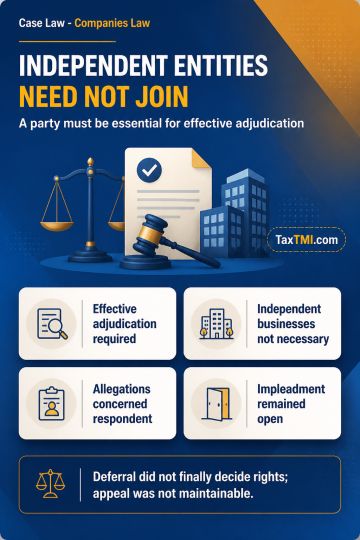
Necessary-party requirements limit impleadment of independent entities, while deferred consideration does not create an appealable adverse determinati...
Food supplement classification requires common parlance and authoritative tests, preventing treatment as proprietary Ayurvedic medicines without suppo...
HC ruled that Transfer Pricing adjustments framework agreed under Mutual Agreement Procedure (MAP) between US and India cannot be applied to non-US transactions. The court emphasized that MAP resolutions are based on consensus between competent authorities of contracting states and cannot be extrapolated to transactions outside its scope. Arm's Length Price for non-US transactions must be determined under Section 92C and Rule 10B. The ITAT's direction to apply US MAP framework to non-US transactions was overturned as it effectively imposed a negotiated settlement where no consensus existed with other countries' tax authorities. The framework's application would improperly foreclose an assessee's right to dispute TP adjustments in materially different situations.
HC ruled that Transfer Pricing adjustments framework agreed under Mutual Agreement Procedure (MAP) between US and India cannot be applied to non-US transactions. The court emphasized that MAP resolutions are based on consensus between competent authorities of contracting states and cannot be extrapolated to transactions outside its scope. Arm's Length Price for non-US transactions must be determined under Section 92C and Rule 10B. The ITAT's direction to apply US MAP framework to non-US transactions was overturned as it effectively imposed a negotiated settlement where no consensus existed with other countries' tax authorities. The framework's application would improperly foreclose an assessee's right to dispute TP adjustments in materially different situations.
Note: It is a system-generated summary and is for quick reference only.
 TaxTMI
 of 4805
















 Join Channel


 TaxTMI
