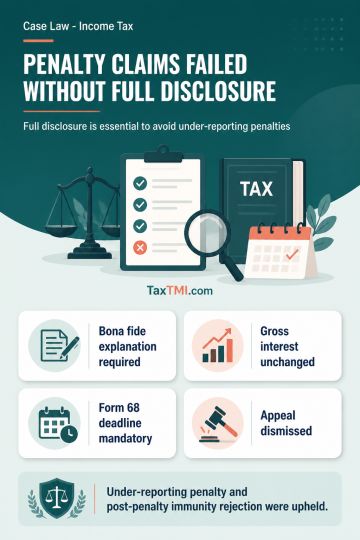
Bona fide disclosure requirements govern under-reporting penalties, and post-penalty immunity applications cannot secure available statutory protectio...
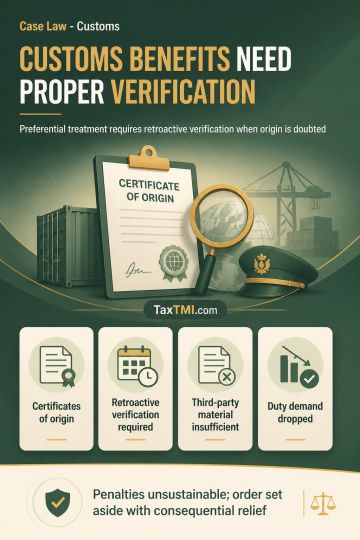
Certificate-of-origin verification procedure governs preferential customs benefits; denial without retroactive verification was set aside with consequ...
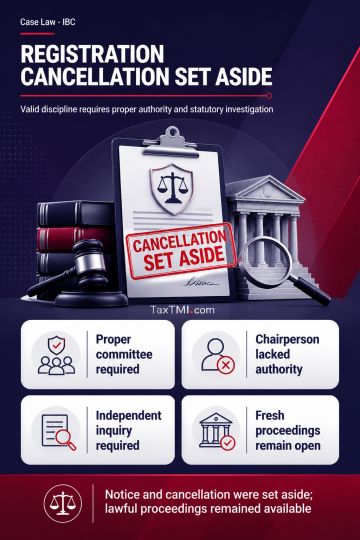
Disciplinary Committee jurisdiction and mandatory investigation requirements invalidated cancellation of an insolvency professional's registration and...
HC determined the initial cash seizure by state GST officers was unlawful, lacking statutory authority under CGST/SGST Act. The subsequent transfer of seized funds to Income Tax Department under Section 132A of IT Act could not legitimize the original illegal seizure. The court emphasized constitutional principles under Articles 265 and 300A protecting against unauthorized property expropriation and taxation. Neither GST Department nor Income Tax Department could retain the seized cash prior to completing their respective proceedings. The ruling reinforces fundamental constitutional safeguards against arbitrary state action in tax enforcement matters. Appeal resolved with direction to release seized funds pending completion of formal proceedings.
HC determined the initial cash seizure by state GST officers was unlawful, lacking statutory authority under CGST/SGST Act. The subsequent transfer of seized funds to Income Tax Department under Section 132A of IT Act could not legitimize the original illegal seizure. The court emphasized constitutional principles under Articles 265 and 300A protecting against unauthorized property expropriation and taxation. Neither GST Department nor Income Tax Department could retain the seized cash prior to completing their respective proceedings. The ruling reinforces fundamental constitutional safeguards against arbitrary state action in tax enforcement matters. Appeal resolved with direction to release seized funds pending completion of formal proceedings.
Note: It is a system-generated summary and is for quick reference only.
 TaxTMI
 of 4805






 Join Channel


 TaxTMI
