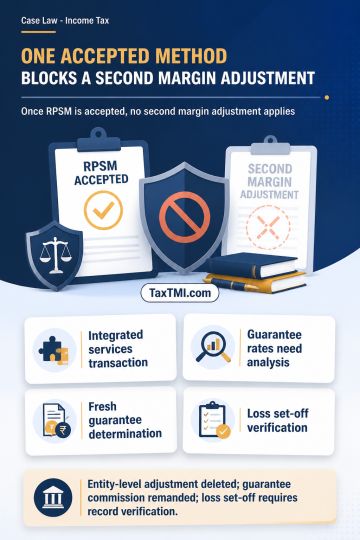
Form 26AS evidence requires successor-entity accounting verification after business transfer, while invoice-supported related-party advertising expend...
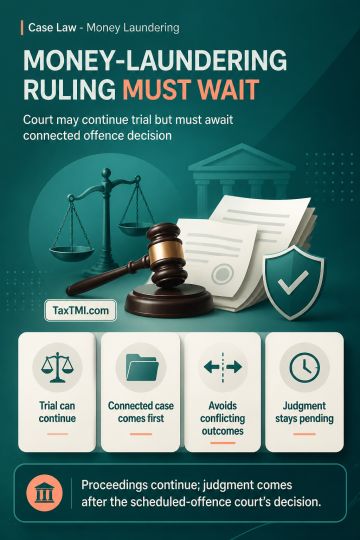
Money-laundering judgment timing requires awaiting the scheduled-offence decision despite continuation of the underlying trial where outcomes directly...
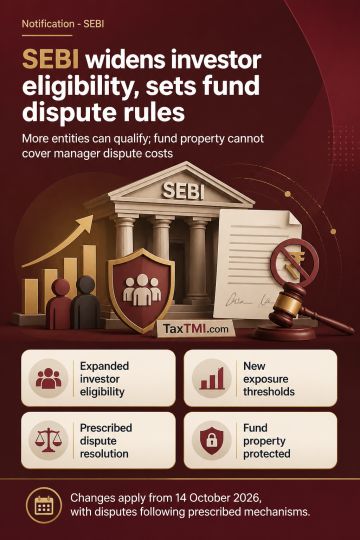
Accredited investor eligibility expands through securities-market exposure, while alternative investment fund disputes require prescribed resolution a...
Page of 4916
Press 'Enter' after typing page number.
41 to 60 of 98302 Results
❮
❯
❯❯
0 / 200
Expand Note
Add to Folder
No Folders have been created
+
Are you sure you want to delete "My most important" ?
HC determined the initial cash seizure by state GST officers was unlawful, lacking statutory authority under CGST/SGST Act. The subsequent transfer of seized funds to Income Tax Department under Section 132A of IT Act could not legitimize the original illegal seizure. The court emphasized constitutional principles under Articles 265 and 300A protecting against unauthorized property expropriation and taxation. Neither GST Department nor Income Tax Department could retain the seized cash prior to completing their respective proceedings. The ruling reinforces fundamental constitutional safeguards against arbitrary state action in tax enforcement matters. Appeal resolved with direction to release seized funds pending completion of formal proceedings.
HC determined the initial cash seizure by state GST officers was unlawful, lacking statutory authority under CGST/SGST Act. The subsequent transfer of seized funds to Income Tax Department under Section 132A of IT Act could not legitimize the original illegal seizure. The court emphasized constitutional principles under Articles 265 and 300A protecting against unauthorized property expropriation and taxation. Neither GST Department nor Income Tax Department could retain the seized cash prior to completing their respective proceedings. The ruling reinforces fundamental constitutional safeguards against arbitrary state action in tax enforcement matters. Appeal resolved with direction to release seized funds pending completion of formal proceedings.
Note: It is a system-generated summary and is for quick reference only.
 TaxTMI
  TaxTMI
 of 4916