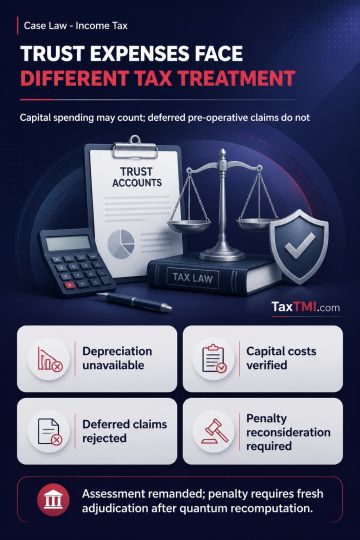
Charitable trust income application permits verified capital expenditure but rejects deferred pre-operative claims and requires reconsideration of con...
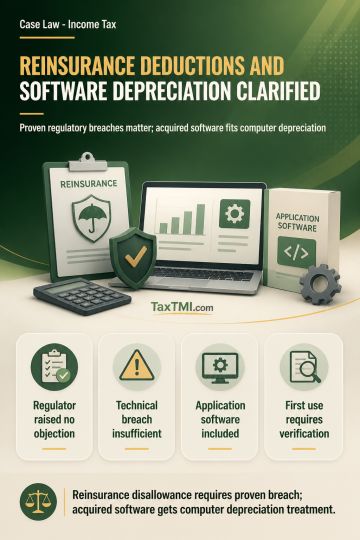
Reinsurance premium deductions require established regulatory breaches, while independently acquired software qualifies within the computer depreciati...
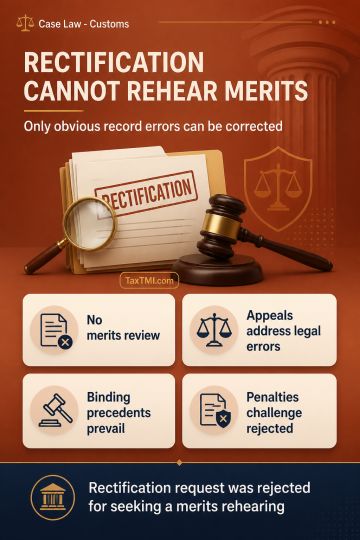
Rectification of mistake remains limited to self-evident record errors, preventing merits review through miscellaneous applications and preserving fin...
Tender creditworthiness conditions may extend to de facto Promoter Directors, with post-participation challenges generally barred absent arbitrariness...
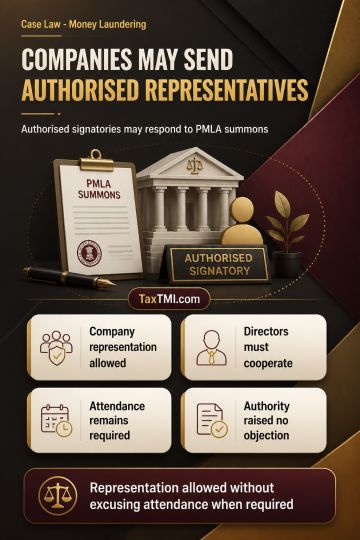
Corporate representation in PMLA summons proceedings permitted through an authorised signatory, subject to directors' continuing cooperation and atten...
HC held that transitional credit under CGST Act is not available for capital goods in transit as of the appointed date. While Section 140 of CGST Act allows carrying forward unutilized CENVAT credit for both inputs and capital goods, sub-section (5) specifically distinguishes between them. The CENVAT Credit Rules 2017, which superseded the 2004 Rules, provides no facility for claiming credit of excise duty on capital goods in transit. Following RSPL Limited precedent, the court affirmed that treating inputs and capital goods differently is constitutionally valid under Article 14, as they form distinct classes. The distinction in transitional provisions between inputs and capital goods was found lawful and justified. Application dismissed.
HC held that transitional credit under CGST Act is not available for capital goods in transit as of the appointed date. While Section 140 of CGST Act allows carrying forward unutilized CENVAT credit for both inputs and capital goods, sub-section (5) specifically distinguishes between them. The CENVAT Credit Rules 2017, which superseded the 2004 Rules, provides no facility for claiming credit of excise duty on capital goods in transit. Following RSPL Limited precedent, the court affirmed that treating inputs and capital goods differently is constitutionally valid under Article 14, as they form distinct classes. The distinction in transitional provisions between inputs and capital goods was found lawful and justified. Application dismissed.
Note: It is a system-generated summary and is for quick reference only.
 TaxTMI
 of 4805







 Join Channel


 TaxTMI
