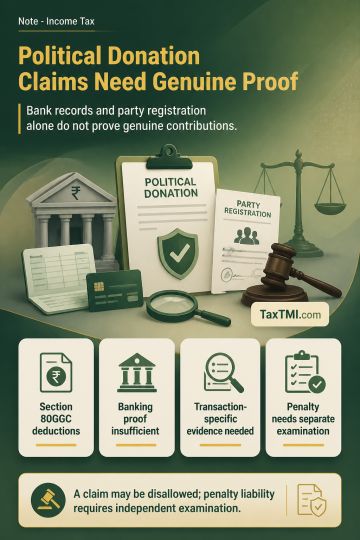
Political contribution deductions require genuine transactions; banking records and party registration alone cannot defeat evidence of accommodation e...
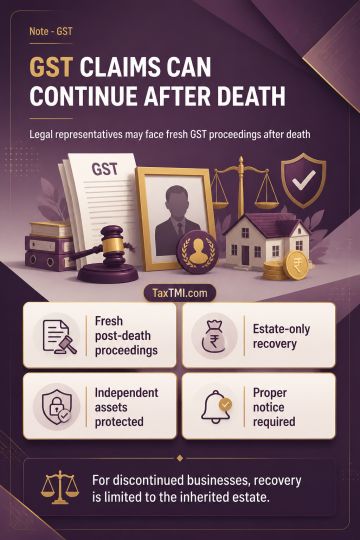
Post-death GST liability permits fresh proceedings against legal representatives, while discontinued-business recovery remains limited to the inherite...
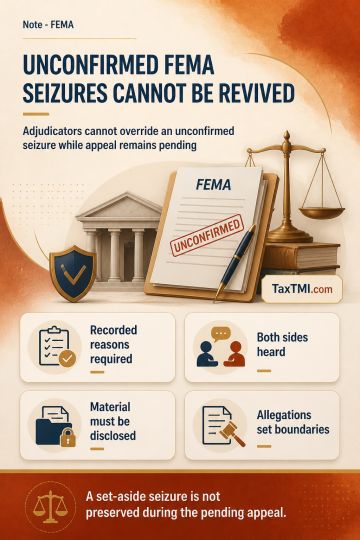
Non-confirmation of FEMA seizure prevents adjudicators from overriding pending appellate findings on recorded reasons and suspected foreign asset hold...
HC held that transitional credit under CGST Act is not available for capital goods in transit as of the appointed date. While Section 140 of CGST Act allows carrying forward unutilized CENVAT credit for both inputs and capital goods, sub-section (5) specifically distinguishes between them. The CENVAT Credit Rules 2017, which superseded the 2004 Rules, provides no facility for claiming credit of excise duty on capital goods in transit. Following RSPL Limited precedent, the court affirmed that treating inputs and capital goods differently is constitutionally valid under Article 14, as they form distinct classes. The distinction in transitional provisions between inputs and capital goods was found lawful and justified. Application dismissed.
HC held that transitional credit under CGST Act is not available for capital goods in transit as of the appointed date. While Section 140 of CGST Act allows carrying forward unutilized CENVAT credit for both inputs and capital goods, sub-section (5) specifically distinguishes between them. The CENVAT Credit Rules 2017, which superseded the 2004 Rules, provides no facility for claiming credit of excise duty on capital goods in transit. Following RSPL Limited precedent, the court affirmed that treating inputs and capital goods differently is constitutionally valid under Article 14, as they form distinct classes. The distinction in transitional provisions between inputs and capital goods was found lawful and justified. Application dismissed.
Note: It is a system-generated summary and is for quick reference only.
 TaxTMI
  TaxTMI