Opportunity to respond to jurisdictional reports is mandatory before customs settlement duty enhancement; connected applications require consistent ad...
Specific customs headings for scaffolding components prevail over general classification, invalidating misclassification proceedings and enabling with...
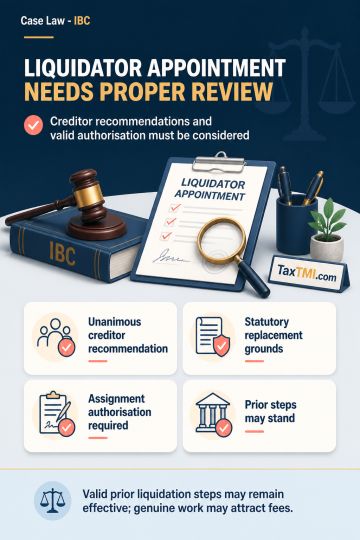
Liquidator appointment under Section 34 requires consideration of creditor recommendations, valid professional authorisation, and preservation of vali...
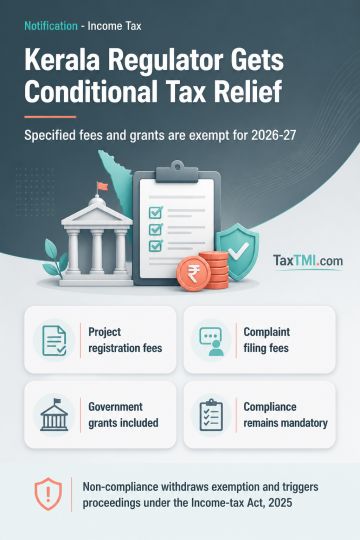
Income-tax exemption for specified regulatory fees and government grants applies subject to non-commercial activity and continuing compliance conditio...
Digital accessibility audit and remediation deadlines extended, while all other disability-compliance obligations for regulated entities remain unchan...
HC held that transitional credit under CGST Act is not available for capital goods in transit as of the appointed date. While Section 140 of CGST Act allows carrying forward unutilized CENVAT credit for both inputs and capital goods, sub-section (5) specifically distinguishes between them. The CENVAT Credit Rules 2017, which superseded the 2004 Rules, provides no facility for claiming credit of excise duty on capital goods in transit. Following RSPL Limited precedent, the court affirmed that treating inputs and capital goods differently is constitutionally valid under Article 14, as they form distinct classes. The distinction in transitional provisions between inputs and capital goods was found lawful and justified. Application dismissed.
HC held that transitional credit under CGST Act is not available for capital goods in transit as of the appointed date. While Section 140 of CGST Act allows carrying forward unutilized CENVAT credit for both inputs and capital goods, sub-section (5) specifically distinguishes between them. The CENVAT Credit Rules 2017, which superseded the 2004 Rules, provides no facility for claiming credit of excise duty on capital goods in transit. Following RSPL Limited precedent, the court affirmed that treating inputs and capital goods differently is constitutionally valid under Article 14, as they form distinct classes. The distinction in transitional provisions between inputs and capital goods was found lawful and justified. Application dismissed.
Note: It is a system-generated summary and is for quick reference only.
 TaxTMI
 of 4803












 Join Channel


 TaxTMI
