Commercial vehicle depreciation, scientifically determined warranty provisions and exempt-income disallowances were resolved in favour of the taxpayer...
Inherited property sale proceeds require capital-gains treatment where ownership is supported by evidence, not suspicion or unverified signature doubt...
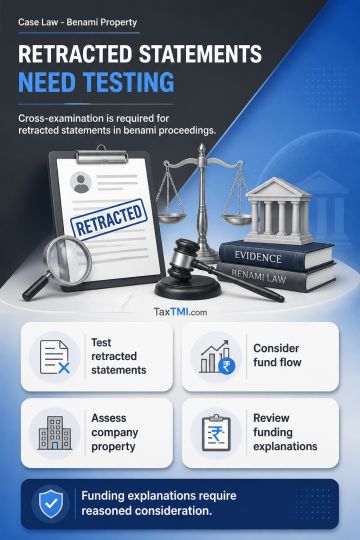
Cross-examination of retracted statements is essential where foundational evidence supports a benami allegation and documented funding explanations re...
Capital-goods exemption covers plant-modernisation accessories, while the import restriction applies only to earlier capital-goods components and spar...
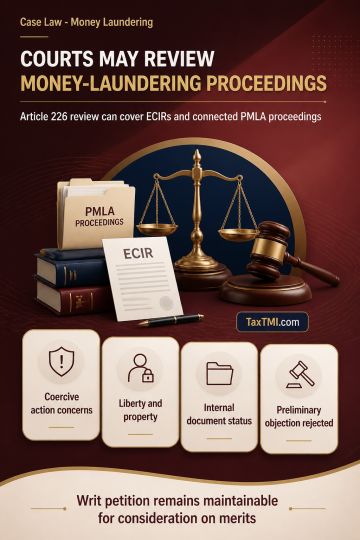
Constitutional judicial review permits challenges to ECIRs and connected money-laundering proceedings where coercive action affects fundamental intere...
HC held that transitional credit under CGST Act is not available for capital goods in transit as of the appointed date. While Section 140 of CGST Act allows carrying forward unutilized CENVAT credit for both inputs and capital goods, sub-section (5) specifically distinguishes between them. The CENVAT Credit Rules 2017, which superseded the 2004 Rules, provides no facility for claiming credit of excise duty on capital goods in transit. Following RSPL Limited precedent, the court affirmed that treating inputs and capital goods differently is constitutionally valid under Article 14, as they form distinct classes. The distinction in transitional provisions between inputs and capital goods was found lawful and justified. Application dismissed.
HC held that transitional credit under CGST Act is not available for capital goods in transit as of the appointed date. While Section 140 of CGST Act allows carrying forward unutilized CENVAT credit for both inputs and capital goods, sub-section (5) specifically distinguishes between them. The CENVAT Credit Rules 2017, which superseded the 2004 Rules, provides no facility for claiming credit of excise duty on capital goods in transit. Following RSPL Limited precedent, the court affirmed that treating inputs and capital goods differently is constitutionally valid under Article 14, as they form distinct classes. The distinction in transitional provisions between inputs and capital goods was found lawful and justified. Application dismissed.
Note: It is a system-generated summary and is for quick reference only.
 TaxTMI
 of 4796











 Join Channel


 TaxTMI
