Transaction value rejection requires reliable corroboration; refundable VAT is excluded and temporary registration does not defeat new-vehicle exempti...
Appellate jurisdiction remains available where a wrist-worn gold ornament cannot conclusively be characterised as imported baggage at the preliminary ...
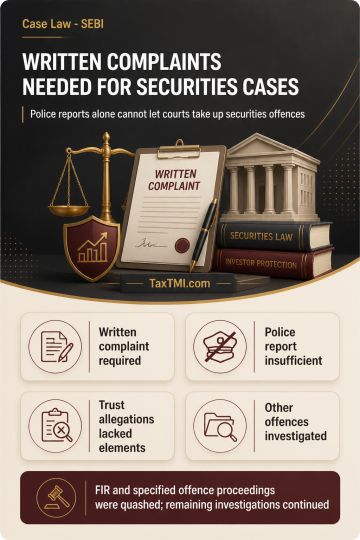
Written complaint requirement bars cognizance on police reports for securities offences, while unsupported breach of trust and cheating allegations fa...
Risk-based postal import clearance standardises electronic assessment, document requests, duty realisation and delivery controls at Foreign Post Offic...
Customs Cargo Service Provider appointment extends custodianship to additional terminal land, subject to cargo-control, security and licence condition...
The HC found that the writ petition was not maintainable as the issues raised pertained to complex questions of fact and law squarely within the jurisdiction of the adjudicating authority under the CGST Act, 2017. The petitioner's grievances related to invocation of extended period of limitation, allegations of misclassification of goods, and denial of Input Tax Credit, necessitating detailed factual inquiry outside the HC's writ jurisdiction. The HC held that writ courts do not interfere where statutory remedies are available unless there is a clear violation of fundamental rights, lack of jurisdiction, or procedural perversity leading to manifest injustice, which were not demonstrated. The petitioner was advised to exhaust statutory remedies, including responding to the show cause notice and availing appellate remedies if dissatisfied. The petition was dismissed.
The HC found that the writ petition was not maintainable as the issues raised pertained to complex questions of fact and law squarely within the jurisdiction of the adjudicating authority under the CGST Act, 2017. The petitioner's grievances related to invocation of extended period of limitation, allegations of misclassification of goods, and denial of Input Tax Credit, necessitating detailed factual inquiry outside the HC's writ jurisdiction. The HC held that writ courts do not interfere where statutory remedies are available unless there is a clear violation of fundamental rights, lack of jurisdiction, or procedural perversity leading to manifest injustice, which were not demonstrated. The petitioner was advised to exhaust statutory remedies, including responding to the show cause notice and availing appellate remedies if dissatisfied. The petition was dismissed.
Note: It is a system-generated summary and is for quick reference only.
 TaxTMI
 of 4784







 Join Channel


 TaxTMI