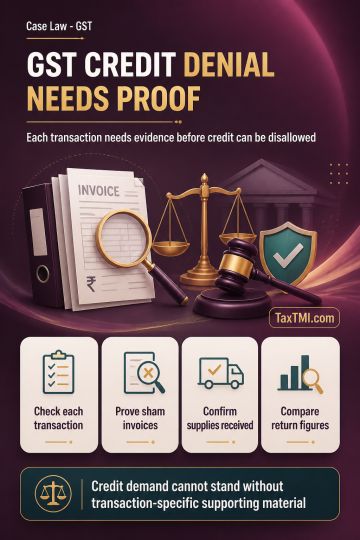
The HC found that the writ petition was not maintainable as the issues raised pertained to complex questions of fact and law squarely within the jurisdiction of the adjudicating authority under the CGST Act, 2017. The petitioner's grievances related to invocation of extended period of limitation, allegations of misclassification of goods, and denial of Input Tax Credit, necessitating detailed factual inquiry outside the HC's writ jurisdiction. The HC held that writ courts do not interfere where statutory remedies are available unless there is a clear violation of fundamental rights, lack of jurisdiction, or procedural perversity leading to manifest injustice, which were not demonstrated. The petitioner was advised to exhaust statutory remedies, including responding to the show cause notice and availing appellate remedies if dissatisfied. The petition was dismissed.
The HC found that the writ petition was not maintainable as the issues raised pertained to complex questions of fact and law squarely within the jurisdiction of the adjudicating authority under the CGST Act, 2017. The petitioner's grievances related to invocation of extended period of limitation, allegations of misclassification of goods, and denial of Input Tax Credit, necessitating detailed factual inquiry outside the HC's writ jurisdiction. The HC held that writ courts do not interfere where statutory remedies are available unless there is a clear violation of fundamental rights, lack of jurisdiction, or procedural perversity leading to manifest injustice, which were not demonstrated. The petitioner was advised to exhaust statutory remedies, including responding to the show cause notice and availing appellate remedies if dissatisfied. The petition was dismissed.
Note: It is a system-generated summary and is for quick reference only.
 TaxTMI
  TaxTMI