Origin Declaration authentication governs preferential tariff claims under India-UK CETA, requiring a validated reference number before import clearan...
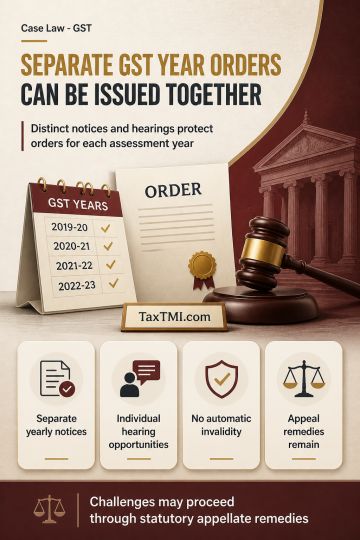
Separate assessment orders for different years remain valid when distinct notices and hearing opportunities prevent prejudice from combined proceeding...
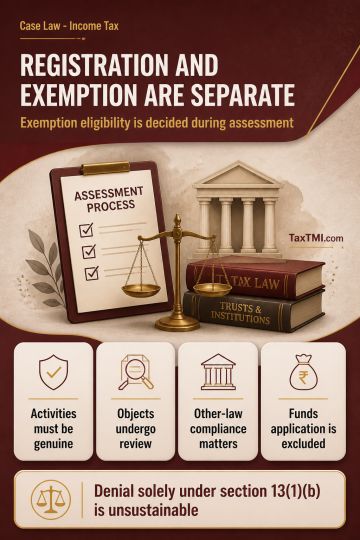
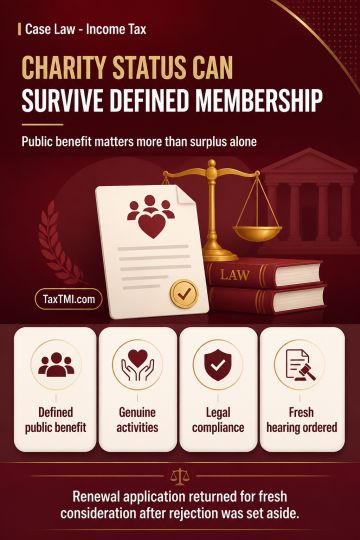
Defined public benefit can retain charitable character; registration renewal requires examining genuine activities and legal compliance, not surplus a...
Capital reduction is distinct from share buy-back, preventing buy-back tax; restructuring interest and related business deductions also survive scruti...
The High Court held that statements recorded u/s 132(4) of the Income Tax Act, 1961, are admissible evidence u/s 158BD read with Section 3 of the Indian Evidence Act, 1872, and Section 131. In the present case, the husbands of the assessees made statements during search operations that the total investment in constructing the house property was Rs. 15 lakhs, though only Rs. 7 lakhs was accounted for. The assessees reiterated this fact on 03.05.1999. Such statements are presumed true unless the assessees plead that they were obtained forcibly, by coercion, or undue influence. The burden lies on the assessees to establish that the admission is incorrect or wrong. As the assessees failed to discharge this burden, the Tribunal rightly set aside the order passed by the CIT (Appeals), deciding against the assessees.
The High Court held that statements recorded u/s 132(4) of the Income Tax Act, 1961, are admissible evidence u/s 158BD read with Section 3 of the Indian Evidence Act, 1872, and Section 131. In the present case, the husbands of the assessees made statements during search operations that the total investment in constructing the house property was Rs. 15 lakhs, though only Rs. 7 lakhs was accounted for. The assessees reiterated this fact on 03.05.1999. Such statements are presumed true unless the assessees plead that they were obtained forcibly, by coercion, or undue influence. The burden lies on the assessees to establish that the admission is incorrect or wrong. As the assessees failed to discharge this burden, the Tribunal rightly set aside the order passed by the CIT (Appeals), deciding against the assessees.
Note: It is a system-generated summary and is for quick reference only.
 TaxTMI
  TaxTMI
 of 4811







 Join Channel