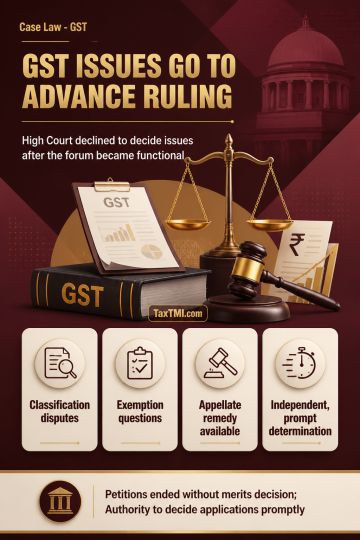
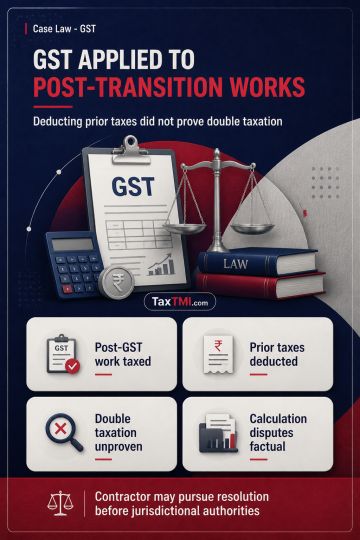
Advance-ruling mechanism governs pending GST classification, exemption and taxability disputes, limiting writ review once the specialised forum functi...
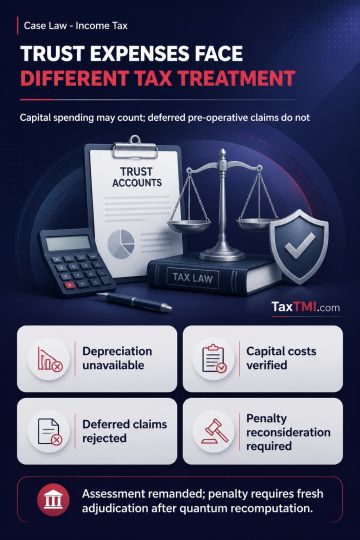
Charitable trust income application permits verified capital expenditure but rejects deferred pre-operative claims and requires reconsideration of con...
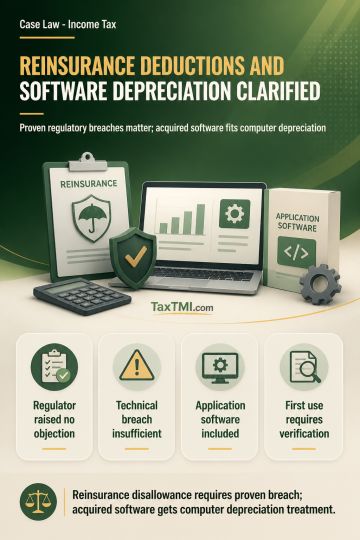
Reinsurance premium deductions require established regulatory breaches, while independently acquired software qualifies within the computer depreciati...
The High Court held that statements recorded u/s 132(4) of the Income Tax Act, 1961, are admissible evidence u/s 158BD read with Section 3 of the Indian Evidence Act, 1872, and Section 131. In the present case, the husbands of the assessees made statements during search operations that the total investment in constructing the house property was Rs. 15 lakhs, though only Rs. 7 lakhs was accounted for. The assessees reiterated this fact on 03.05.1999. Such statements are presumed true unless the assessees plead that they were obtained forcibly, by coercion, or undue influence. The burden lies on the assessees to establish that the admission is incorrect or wrong. As the assessees failed to discharge this burden, the Tribunal rightly set aside the order passed by the CIT (Appeals), deciding against the assessees.
The High Court held that statements recorded u/s 132(4) of the Income Tax Act, 1961, are admissible evidence u/s 158BD read with Section 3 of the Indian Evidence Act, 1872, and Section 131. In the present case, the husbands of the assessees made statements during search operations that the total investment in constructing the house property was Rs. 15 lakhs, though only Rs. 7 lakhs was accounted for. The assessees reiterated this fact on 03.05.1999. Such statements are presumed true unless the assessees plead that they were obtained forcibly, by coercion, or undue influence. The burden lies on the assessees to establish that the admission is incorrect or wrong. As the assessees failed to discharge this burden, the Tribunal rightly set aside the order passed by the CIT (Appeals), deciding against the assessees.
Note: It is a system-generated summary and is for quick reference only.
 TaxTMI
  TaxTMI
 of 4809





 Join Channel


