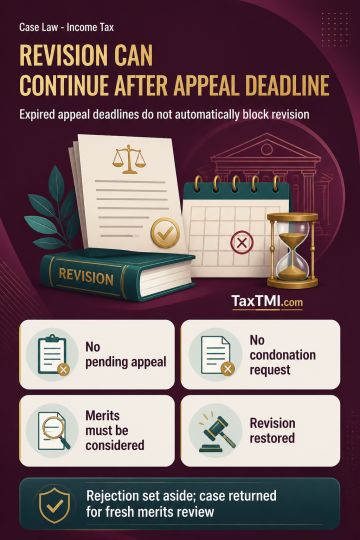
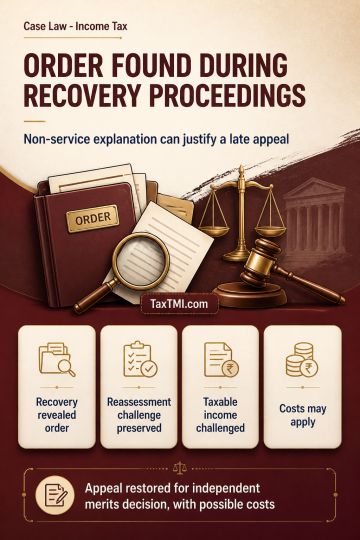
Condonation of delay permits statutory appeal restoration where inadequate service explanation prevented consideration of reassessment and taxable-inc...
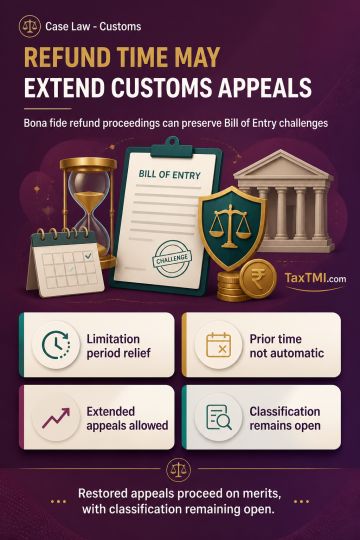
Limitation in customs appeals permits exclusion for bona fide refund proceedings, enabling restoration of Bill of Entry assessment challenges on merit...
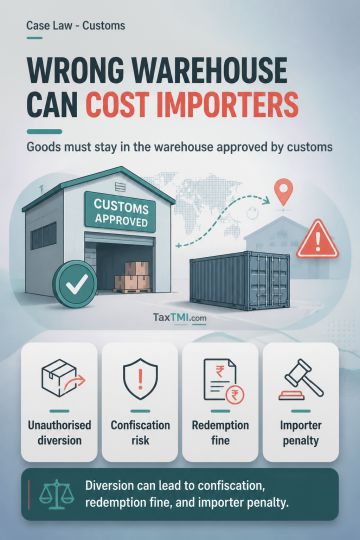
Warehousing permission requires deposit at the designated bonded warehouse; unauthorised diversion triggers confiscation, redemption fine and importer...
Page of 4805
Press 'Enter' after typing page number.
281 to 300 of 96100 Results
❮
❯
❯❯
0 / 200
Expand Note
Add to Folder
No Folders have been created
+
Are you sure you want to delete "My most important" ?
The High Court held that statements recorded u/s 132(4) of the Income Tax Act, 1961, are admissible evidence u/s 158BD read with Section 3 of the Indian Evidence Act, 1872, and Section 131. In the present case, the husbands of the assessees made statements during search operations that the total investment in constructing the house property was Rs. 15 lakhs, though only Rs. 7 lakhs was accounted for. The assessees reiterated this fact on 03.05.1999. Such statements are presumed true unless the assessees plead that they were obtained forcibly, by coercion, or undue influence. The burden lies on the assessees to establish that the admission is incorrect or wrong. As the assessees failed to discharge this burden, the Tribunal rightly set aside the order passed by the CIT (Appeals), deciding against the assessees.
The High Court held that statements recorded u/s 132(4) of the Income Tax Act, 1961, are admissible evidence u/s 158BD read with Section 3 of the Indian Evidence Act, 1872, and Section 131. In the present case, the husbands of the assessees made statements during search operations that the total investment in constructing the house property was Rs. 15 lakhs, though only Rs. 7 lakhs was accounted for. The assessees reiterated this fact on 03.05.1999. Such statements are presumed true unless the assessees plead that they were obtained forcibly, by coercion, or undue influence. The burden lies on the assessees to establish that the admission is incorrect or wrong. As the assessees failed to discharge this burden, the Tribunal rightly set aside the order passed by the CIT (Appeals), deciding against the assessees.
Note: It is a system-generated summary and is for quick reference only.
 TaxTMI
 of 4805







 Join Channel


 TaxTMI