Defined public benefit can retain charitable character; registration renewal requires examining genuine activities and legal compliance, not surplus a...
Capital reduction is distinct from share buy-back, preventing buy-back tax; restructuring interest and related business deductions also survive scruti...
Transfer pricing and tax deductions upheld on established principles, while employee contributions and warranty provisions returned for fresh examinat...
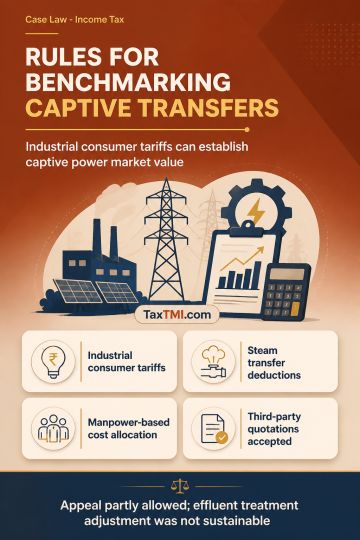
Captive transfer pricing relies on industrial consumer tariffs, while genuine quotations can benchmark effluent treatment transfers under the Other Me...
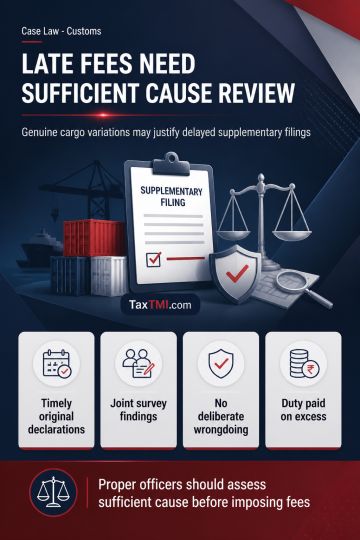
Specific tariff classification for ophthalmic instruments and extended limitation principles determine the treatment of duty demands, confiscation, an...
Integrated golf function determines classification, placing launch monitors and simulators under other golf equipment rather than measuring instrument...
The Securities and Exchange Board of India (SEBI) issued revised guidelines for capacity planning and real-time performance monitoring framework for Market Infrastructure Institutions (MIIs) like stock exchanges, clearing corporations, and depositories. Key requirements include proactive capacity planning methodology, maintaining installed capacity at least 1.5 times projected peak load based on sustained peak trend, comprehensive quarterly stress testing, horizontal and vertical scalability testing, automated performance monitoring with predefined thresholds and alert systems, maintaining asset registers, enhancing capacity if utilization exceeds 75%, assessing impact of changes, including requirements in vendor SLAs, and having a defined policy approved by Standing Committee on Technology and Board. MIIs must submit revised guidelines to SEBI within 3 months after board approval.
The Securities and Exchange Board of India (SEBI) issued revised guidelines for capacity planning and real-time performance monitoring framework for Market Infrastructure Institutions (MIIs) like stock exchanges, clearing corporations, and depositories. Key requirements include proactive capacity planning methodology, maintaining installed capacity at least 1.5 times projected peak load based on sustained peak trend, comprehensive quarterly stress testing, horizontal and vertical scalability testing, automated performance monitoring with predefined thresholds and alert systems, maintaining asset registers, enhancing capacity if utilization exceeds 75%, assessing impact of changes, including requirements in vendor SLAs, and having a defined policy approved by Standing Committee on Technology and Board. MIIs must submit revised guidelines to SEBI within 3 months after board approval.
Note: It is a system-generated summary and is for quick reference only.
 TaxTMI
 of 4807



















 Join Channel


 TaxTMI
