Retention of seized property survives where recorded reasons support proceeds of crime, while stayed investigation periods are excluded from limitatio...
Specified income of Baddi Barotiwala Nalagarh Development Authority receives conditional tax exemption, retrospectively covering its designated assess...
Specified development authority income receives retrospective tax exemption, subject to non-commercial activity, unchanged income sources, and return-...
Unified Brand India framework introduces voluntary Trust Mark certification and funding support for export branding, packaging and global promotional ...
Origin Declaration authentication governs preferential tariff claims under India-UK CETA, requiring a validated reference number before import clearan...
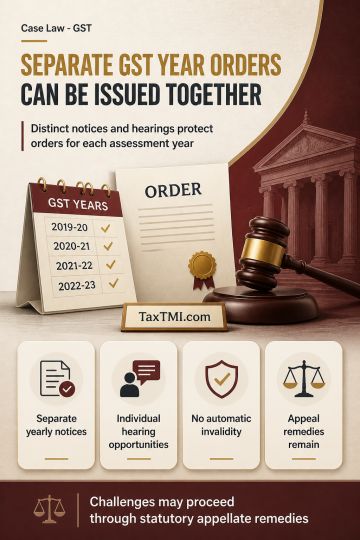
Separate assessment orders for different years remain valid when distinct notices and hearing opportunities prevent prejudice from combined proceeding...
The Securities and Exchange Board of India (SEBI) issued revised guidelines for capacity planning and real-time performance monitoring framework for Market Infrastructure Institutions (MIIs) like stock exchanges, clearing corporations, and depositories. Key requirements include proactive capacity planning methodology, maintaining installed capacity at least 1.5 times projected peak load based on sustained peak trend, comprehensive quarterly stress testing, horizontal and vertical scalability testing, automated performance monitoring with predefined thresholds and alert systems, maintaining asset registers, enhancing capacity if utilization exceeds 75%, assessing impact of changes, including requirements in vendor SLAs, and having a defined policy approved by Standing Committee on Technology and Board. MIIs must submit revised guidelines to SEBI within 3 months after board approval.
The Securities and Exchange Board of India (SEBI) issued revised guidelines for capacity planning and real-time performance monitoring framework for Market Infrastructure Institutions (MIIs) like stock exchanges, clearing corporations, and depositories. Key requirements include proactive capacity planning methodology, maintaining installed capacity at least 1.5 times projected peak load based on sustained peak trend, comprehensive quarterly stress testing, horizontal and vertical scalability testing, automated performance monitoring with predefined thresholds and alert systems, maintaining asset registers, enhancing capacity if utilization exceeds 75%, assessing impact of changes, including requirements in vendor SLAs, and having a defined policy approved by Standing Committee on Technology and Board. MIIs must submit revised guidelines to SEBI within 3 months after board approval.
Note: It is a system-generated summary and is for quick reference only.
 TaxTMI
 of 4805














 Join Channel


 TaxTMI
