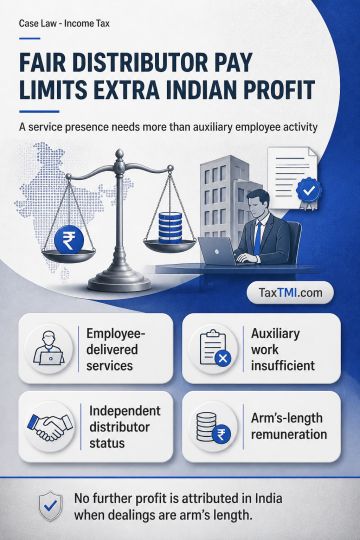
Service permanent establishment requires non-auxiliary services, while arm's-length distributor remuneration precludes further profit attribution in I...
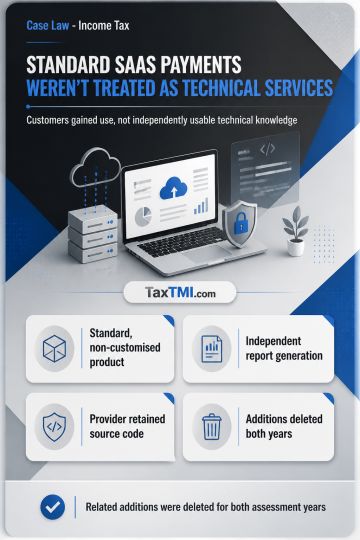
Make-available condition excludes standard SaaS subscription receipts where customers receive no independently usable technical knowledge after subscr...
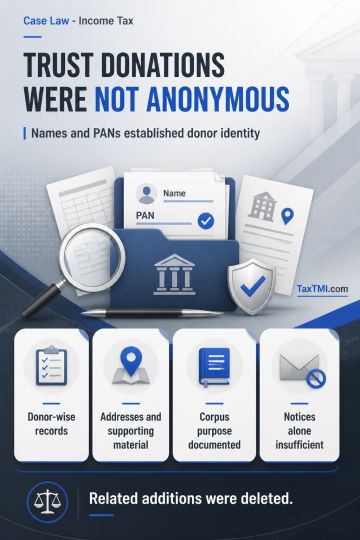
Anonymous donation classification fails where charitable trusts maintain undisputed donor identity records and evidence corpus contributions' intended...
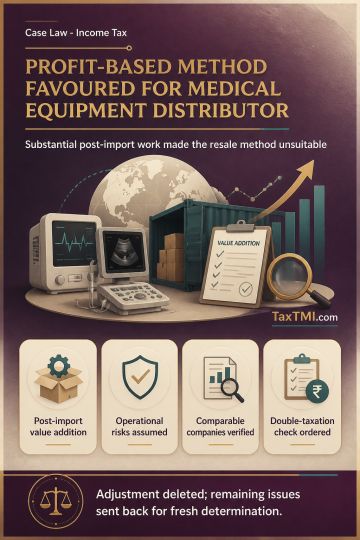
Transfer pricing method selection favours TNMM where medical-equipment distribution involves substantial post-import value addition and operational ri...
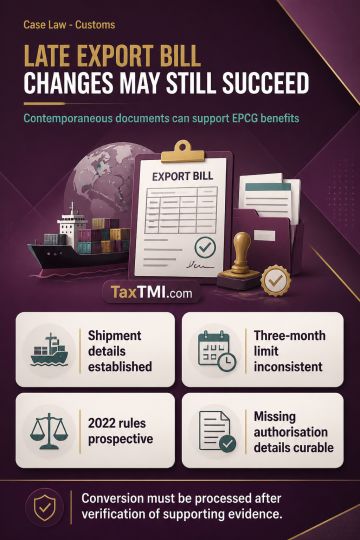
Post-export shipping bill conversion remains available where contemporaneous evidence supports EPCG benefits despite curable procedural omissions and ...
The Securities and Exchange Board of India (SEBI) issued revised guidelines for capacity planning and real-time performance monitoring framework for Market Infrastructure Institutions (MIIs) like stock exchanges, clearing corporations, and depositories. Key requirements include proactive capacity planning methodology, maintaining installed capacity at least 1.5 times projected peak load based on sustained peak trend, comprehensive quarterly stress testing, horizontal and vertical scalability testing, automated performance monitoring with predefined thresholds and alert systems, maintaining asset registers, enhancing capacity if utilization exceeds 75%, assessing impact of changes, including requirements in vendor SLAs, and having a defined policy approved by Standing Committee on Technology and Board. MIIs must submit revised guidelines to SEBI within 3 months after board approval.
The Securities and Exchange Board of India (SEBI) issued revised guidelines for capacity planning and real-time performance monitoring framework for Market Infrastructure Institutions (MIIs) like stock exchanges, clearing corporations, and depositories. Key requirements include proactive capacity planning methodology, maintaining installed capacity at least 1.5 times projected peak load based on sustained peak trend, comprehensive quarterly stress testing, horizontal and vertical scalability testing, automated performance monitoring with predefined thresholds and alert systems, maintaining asset registers, enhancing capacity if utilization exceeds 75%, assessing impact of changes, including requirements in vendor SLAs, and having a defined policy approved by Standing Committee on Technology and Board. MIIs must submit revised guidelines to SEBI within 3 months after board approval.
Note: It is a system-generated summary and is for quick reference only.
 TaxTMI
 of 4803












 Join Channel


 TaxTMI
