Specified regulatory authority income receives conditional tax exemption, subject to non-commercial activity, unchanged income character, and return f...
Tax exemption for regulatory authority income applies retrospectively, subject to non-commercial activity, unchanged income sources, and return-filing...
Input tax credit conditions remain constitutionally valid, with eligible recipient claims considered under GST circulars and retrospective filing dead...
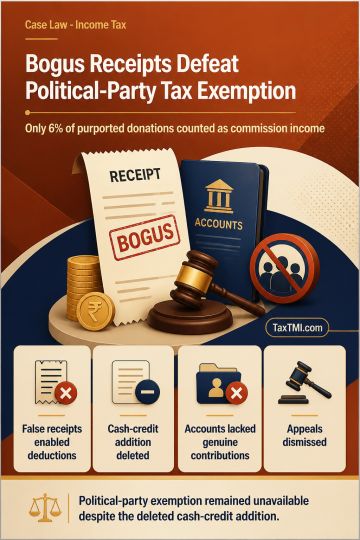
Bogus donation receipts justified commission income assessment and defeated political-party tax exemption for inaccurate accounts and reporting failur...
Pure reimbursement without income element escapes tax withholding, while delayed withholding and unsupported provisions face deferred or renewed scrut...
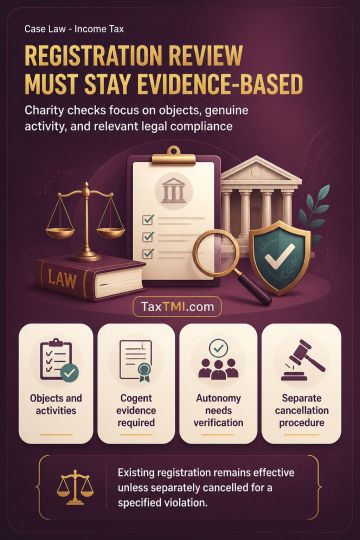
Public benefit requirement defeats charitable registration where residents' association services are reciprocal, member-only facilities governed by mu...
The Securities and Exchange Board of India (SEBI) issued revised guidelines for capacity planning and real-time performance monitoring framework for Market Infrastructure Institutions (MIIs) like stock exchanges, clearing corporations, and depositories. Key requirements include proactive capacity planning methodology, maintaining installed capacity at least 1.5 times projected peak load based on sustained peak trend, comprehensive quarterly stress testing, horizontal and vertical scalability testing, automated performance monitoring with predefined thresholds and alert systems, maintaining asset registers, enhancing capacity if utilization exceeds 75%, assessing impact of changes, including requirements in vendor SLAs, and having a defined policy approved by Standing Committee on Technology and Board. MIIs must submit revised guidelines to SEBI within 3 months after board approval.
The Securities and Exchange Board of India (SEBI) issued revised guidelines for capacity planning and real-time performance monitoring framework for Market Infrastructure Institutions (MIIs) like stock exchanges, clearing corporations, and depositories. Key requirements include proactive capacity planning methodology, maintaining installed capacity at least 1.5 times projected peak load based on sustained peak trend, comprehensive quarterly stress testing, horizontal and vertical scalability testing, automated performance monitoring with predefined thresholds and alert systems, maintaining asset registers, enhancing capacity if utilization exceeds 75%, assessing impact of changes, including requirements in vendor SLAs, and having a defined policy approved by Standing Committee on Technology and Board. MIIs must submit revised guidelines to SEBI within 3 months after board approval.
Note: It is a system-generated summary and is for quick reference only.
 TaxTMI
 of 4805




















 Join Channel


 TaxTMI