Retention of seized property survives where recorded reasons support proceeds of crime, while stayed investigation periods are excluded from limitatio...
Specified income of Baddi Barotiwala Nalagarh Development Authority receives conditional tax exemption, retrospectively covering its designated assess...
Specified development authority income receives retrospective tax exemption, subject to non-commercial activity, unchanged income sources, and return-...
Unified Brand India framework introduces voluntary Trust Mark certification and funding support for export branding, packaging and global promotional ...
Origin Declaration authentication governs preferential tariff claims under India-UK CETA, requiring a validated reference number before import clearan...
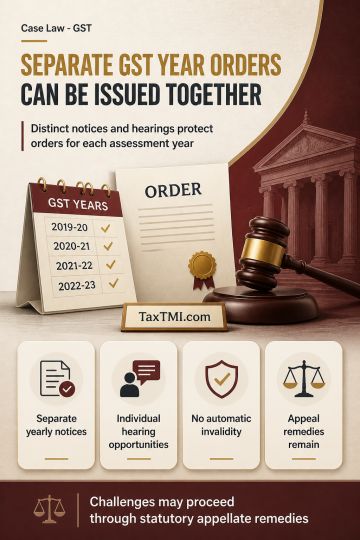
Separate assessment orders for different years remain valid when distinct notices and hearing opportunities prevent prejudice from combined proceeding...
The High Court dismissed the petition challenging the requirement of pre-deposit of Rs. 10 crore for filing an appeal before the CESTAT u/s 35F of the Central Excise Act, 1944. The court held that it lacked discretion to grant a waiver or reduction in the pre-deposit amount, as it would be contrary to the legislative intent. The petitioner was directed to avail the alternative statutory remedy of filing an appeal before the CESTAT. The court observed that while considering a waiver, it must examine if the petitioner has a prima facie case likely to succeed, indicating no gross injustice, excessive demand contrary to facts, or perverse orders, coupled with blameless conduct. However, after examining the facts, the court found no merit to grant a waiver and dismissed the petition.
The High Court dismissed the petition challenging the requirement of pre-deposit of Rs. 10 crore for filing an appeal before the CESTAT u/s 35F of the Central Excise Act, 1944. The court held that it lacked discretion to grant a waiver or reduction in the pre-deposit amount, as it would be contrary to the legislative intent. The petitioner was directed to avail the alternative statutory remedy of filing an appeal before the CESTAT. The court observed that while considering a waiver, it must examine if the petitioner has a prima facie case likely to succeed, indicating no gross injustice, excessive demand contrary to facts, or perverse orders, coupled with blameless conduct. However, after examining the facts, the court found no merit to grant a waiver and dismissed the petition.
Note: It is a system-generated summary and is for quick reference only.
 TaxTMI
  TaxTMI
 of 4807

















 Join Channel


