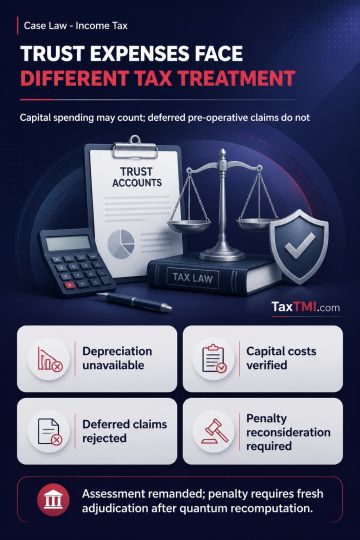
Charitable trust income application permits verified capital expenditure but rejects deferred pre-operative claims and requires reconsideration of con...
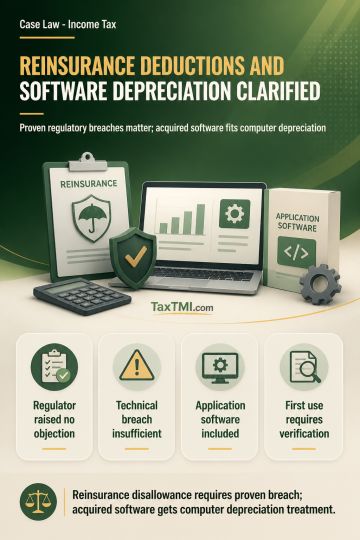
Reinsurance premium deductions require established regulatory breaches, while independently acquired software qualifies within the computer depreciati...
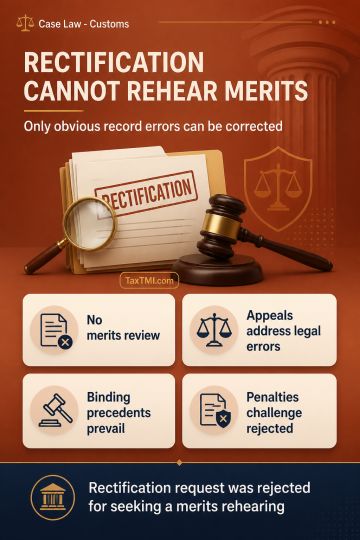
Rectification of mistake remains limited to self-evident record errors, preventing merits review through miscellaneous applications and preserving fin...
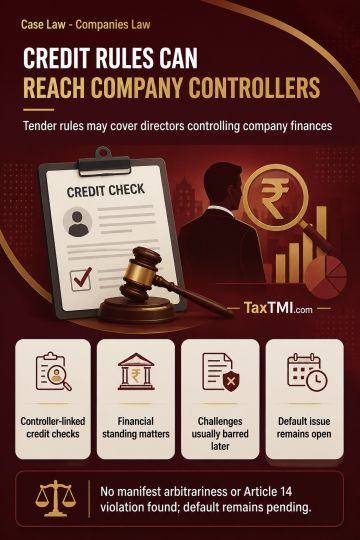
Tender creditworthiness conditions may extend to de facto Promoter Directors, with post-participation challenges generally barred absent arbitrariness...
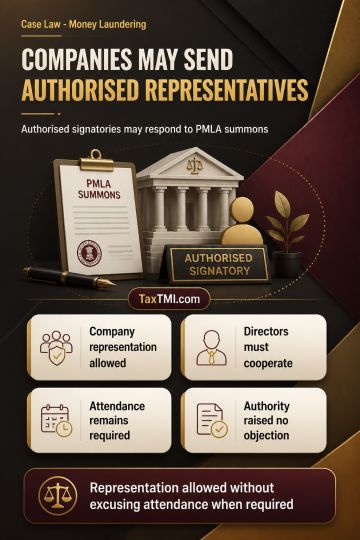
Corporate representation in PMLA summons proceedings permitted through an authorised signatory, subject to directors' continuing cooperation and atten...
The High Court dismissed the petition challenging the requirement of pre-deposit of Rs. 10 crore for filing an appeal before the CESTAT u/s 35F of the Central Excise Act, 1944. The court held that it lacked discretion to grant a waiver or reduction in the pre-deposit amount, as it would be contrary to the legislative intent. The petitioner was directed to avail the alternative statutory remedy of filing an appeal before the CESTAT. The court observed that while considering a waiver, it must examine if the petitioner has a prima facie case likely to succeed, indicating no gross injustice, excessive demand contrary to facts, or perverse orders, coupled with blameless conduct. However, after examining the facts, the court found no merit to grant a waiver and dismissed the petition.
The High Court dismissed the petition challenging the requirement of pre-deposit of Rs. 10 crore for filing an appeal before the CESTAT u/s 35F of the Central Excise Act, 1944. The court held that it lacked discretion to grant a waiver or reduction in the pre-deposit amount, as it would be contrary to the legislative intent. The petitioner was directed to avail the alternative statutory remedy of filing an appeal before the CESTAT. The court observed that while considering a waiver, it must examine if the petitioner has a prima facie case likely to succeed, indicating no gross injustice, excessive demand contrary to facts, or perverse orders, coupled with blameless conduct. However, after examining the facts, the court found no merit to grant a waiver and dismissed the petition.
Note: It is a system-generated summary and is for quick reference only.
 TaxTMI
 of 4805






 Join Channel


 TaxTMI
