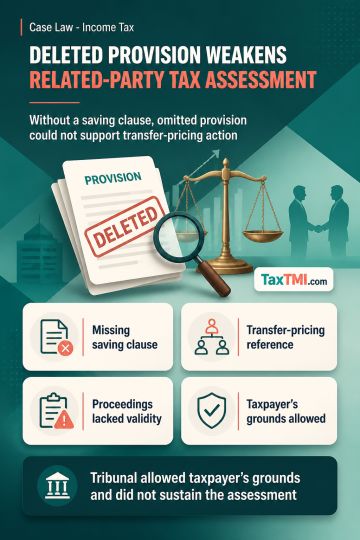
Omitted specified domestic transaction provision invalidates related-party expenditure transfer-pricing references and assessments based on consequent...
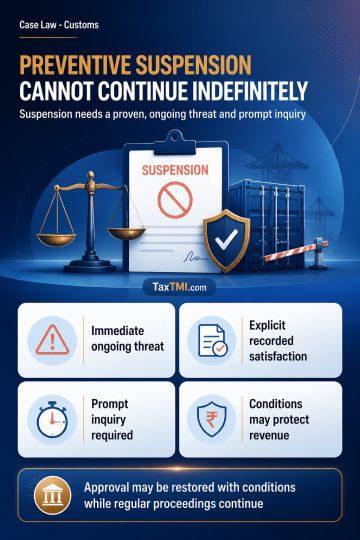
Preventive suspension requires an immediate continuing threat and cannot become indefinite without inquiry, fresh evidence, or proportionate safeguard...
The Customs, Excise and Service Tax Appellate Tribunal (CESTAT) allowed the appeal and set aside the impugned order. The key findings were: 1) The allegation of clandestine removal and evasion of Central Excise duty by diversion of duty-paid inputs was not sustainable. The shortage detected during the physical verification was not reliable as the finished goods available in various sections/sheds were not considered, and the CCTV footage provided by the appellant was disregarded without proper inquiry. 2) Denial of CENVAT credit was not justified. The appellant had established the receipt of inputs in their factory with documentary evidence. The statements relied upon by the Revenue were inadmissible as evidence since the request for cross-examination was rejected without valid grounds. As long as duty payment on outputs is accepted, the benefit of input credit cannot be denied when the appellant has satisfied the requirements.
The Customs, Excise and Service Tax Appellate Tribunal (CESTAT) allowed the appeal and set aside the impugned order. The key findings were: 1) The allegation of clandestine removal and evasion of Central Excise duty by diversion of duty-paid inputs was not sustainable. The shortage detected during the physical verification was not reliable as the finished goods available in various sections/sheds were not considered, and the CCTV footage provided by the appellant was disregarded without proper inquiry. 2) Denial of CENVAT credit was not justified. The appellant had established the receipt of inputs in their factory with documentary evidence. The statements relied upon by the Revenue were inadmissible as evidence since the request for cross-examination was rejected without valid grounds. As long as duty payment on outputs is accepted, the benefit of input credit cannot be denied when the appellant has satisfied the requirements.
Note: It is a system-generated summary and is for quick reference only.
 TaxTMI
 of 4788
















 Join Channel


 TaxTMI