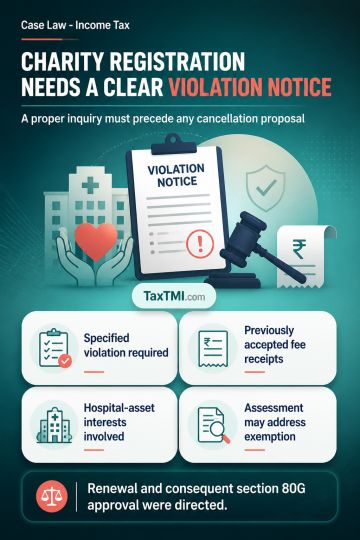
Charitable trust registration requires a specified-violation notice; settled cash deposits and related-party payments did not justify cancellation or ...
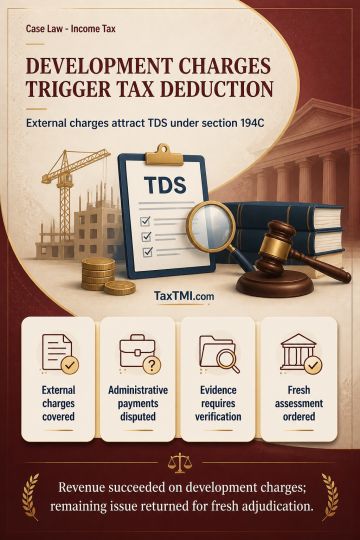
External development charges trigger TDS under section 194C, while disputed administrative payments require factual verification and fresh adjudicatio...
Section 270AA penalty immunity requires identified statutory defaults and a hearing before rejection; reassessment disclosure may constitute under-rep...
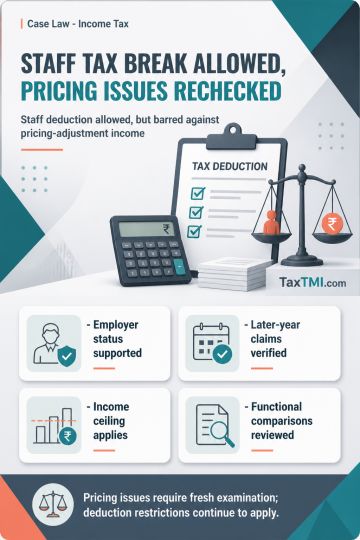
Section 80JJAA employee-cost deduction allowed for deployed staff but barred against transfer-pricing income enhancement, with pricing issues remanded...
Transfer-pricing methodology protects commercially genuine associated-enterprise payments, while pre-2016 secondary adjustments and related notional i...
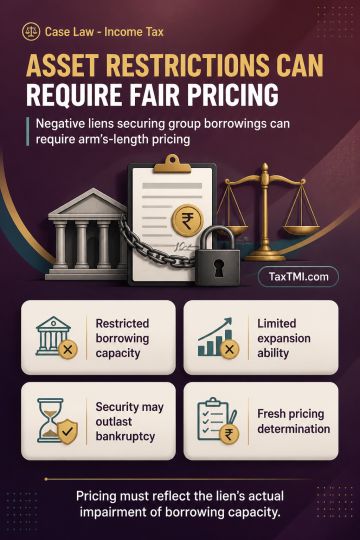
Negative liens over operating assets can constitute international transactions requiring arm's-length pricing reflecting restricted borrowing and expa...
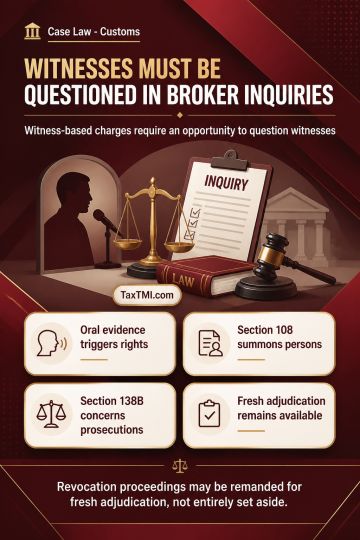
Cross-examination rights in Customs Broker revocation inquiries require witness examination; procedural denial may be cured through fresh adjudication...
The assessee failed to discharge its initial onus to prove creditworthiness and genuineness of the transaction reflecting a sum as outstanding in its final books of accounts. While the law permits taxing credited amounts u/s 68 if the Assessing Officer can reasonably infer that the transaction is not genuine based on evidence, the AO is not required to examine commercial expediency and must give wide latitude to contracting parties' discretion. There was no dispute regarding Unitech's creditworthiness or its payment of Rs. 67.5 crores to the assessee as an advance against property sale. Both parties claimed the transaction was genuine, and Unitech did not reflect it as an expense, making it tax-neutral. The AO found fault with documentation irregularities but flaws may not necessarily indicate subterfuge in absence of material suggesting the credited amount would otherwise be taxable income/undisclosed assets. As per Sumati Dayal, an apparent transaction can be rejected if reasonable grounds indicate it is not real, and the AO can draw inferences about the real transaction. However, since Unitech's creditworthiness was not in doubt, the questions framed by the Revenue were answered in favor of the assessee against the Revenue.
The assessee failed to discharge its initial onus to prove creditworthiness and genuineness of the transaction reflecting a sum as outstanding in its final books of accounts. While the law permits taxing credited amounts u/s 68 if the Assessing Officer can reasonably infer that the transaction is not genuine based on evidence, the AO is not required to examine commercial expediency and must give wide latitude to contracting parties' discretion. There was no dispute regarding Unitech's creditworthiness or its payment of Rs. 67.5 crores to the assessee as an advance against property sale. Both parties claimed the transaction was genuine, and Unitech did not reflect it as an expense, making it tax-neutral. The AO found fault with documentation irregularities but flaws may not necessarily indicate subterfuge in absence of material suggesting the credited amount would otherwise be taxable income/undisclosed assets. As per Sumati Dayal, an apparent transaction can be rejected if reasonable grounds indicate it is not real, and the AO can draw inferences about the real transaction. However, since Unitech's creditworthiness was not in doubt, the questions framed by the Revenue were answered in favor of the assessee against the Revenue.
Note: It is a system-generated summary and is for quick reference only.
 TaxTMI
  TaxTMI
 of 4828
















 Join Channel


