Political contribution deductions require genuine transactions; banking records and party registration alone cannot defeat evidence of accommodation e...
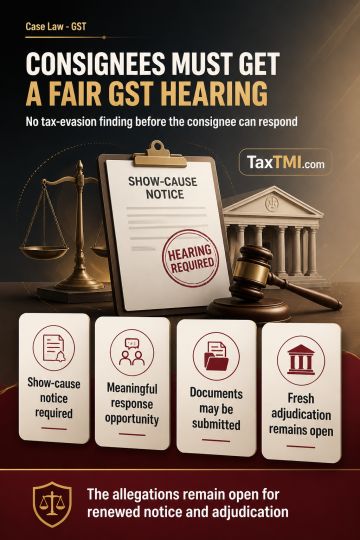
Post-death GST liability permits fresh proceedings against legal representatives, while discontinued-business recovery remains limited to the inherite...
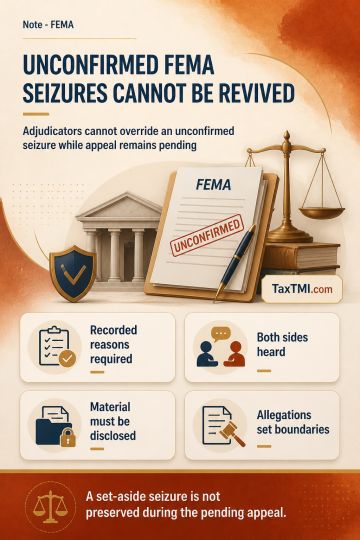
Non-confirmation of FEMA seizure prevents adjudicators from overriding pending appellate findings on recorded reasons and suspected foreign asset hold...
The assessee failed to discharge its initial onus to prove creditworthiness and genuineness of the transaction reflecting a sum as outstanding in its final books of accounts. While the law permits taxing credited amounts u/s 68 if the Assessing Officer can reasonably infer that the transaction is not genuine based on evidence, the AO is not required to examine commercial expediency and must give wide latitude to contracting parties' discretion. There was no dispute regarding Unitech's creditworthiness or its payment of Rs. 67.5 crores to the assessee as an advance against property sale. Both parties claimed the transaction was genuine, and Unitech did not reflect it as an expense, making it tax-neutral. The AO found fault with documentation irregularities but flaws may not necessarily indicate subterfuge in absence of material suggesting the credited amount would otherwise be taxable income/undisclosed assets. As per Sumati Dayal, an apparent transaction can be rejected if reasonable grounds indicate it is not real, and the AO can draw inferences about the real transaction. However, since Unitech's creditworthiness was not in doubt, the questions framed by the Revenue were answered in favor of the assessee against the Revenue.
The assessee failed to discharge its initial onus to prove creditworthiness and genuineness of the transaction reflecting a sum as outstanding in its final books of accounts. While the law permits taxing credited amounts u/s 68 if the Assessing Officer can reasonably infer that the transaction is not genuine based on evidence, the AO is not required to examine commercial expediency and must give wide latitude to contracting parties' discretion. There was no dispute regarding Unitech's creditworthiness or its payment of Rs. 67.5 crores to the assessee as an advance against property sale. Both parties claimed the transaction was genuine, and Unitech did not reflect it as an expense, making it tax-neutral. The AO found fault with documentation irregularities but flaws may not necessarily indicate subterfuge in absence of material suggesting the credited amount would otherwise be taxable income/undisclosed assets. As per Sumati Dayal, an apparent transaction can be rejected if reasonable grounds indicate it is not real, and the AO can draw inferences about the real transaction. However, since Unitech's creditworthiness was not in doubt, the questions framed by the Revenue were answered in favor of the assessee against the Revenue.
Note: It is a system-generated summary and is for quick reference only.
 TaxTMI
  TaxTMI