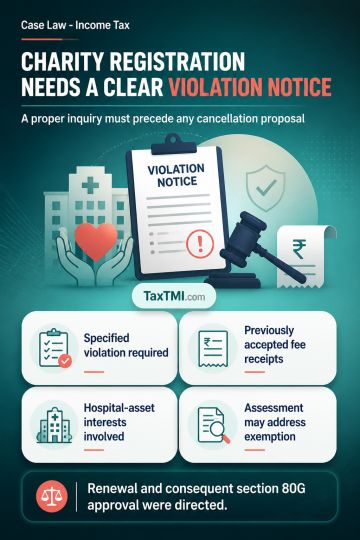
Charitable trust registration requires a specified-violation notice; settled cash deposits and related-party payments did not justify cancellation or ...
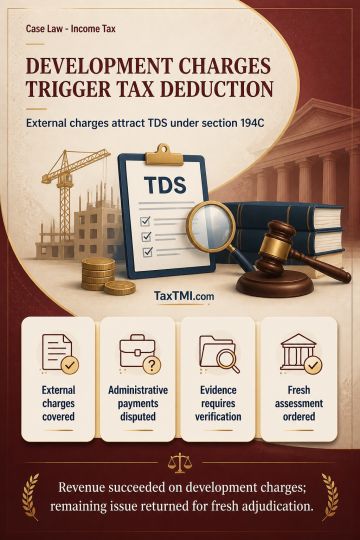
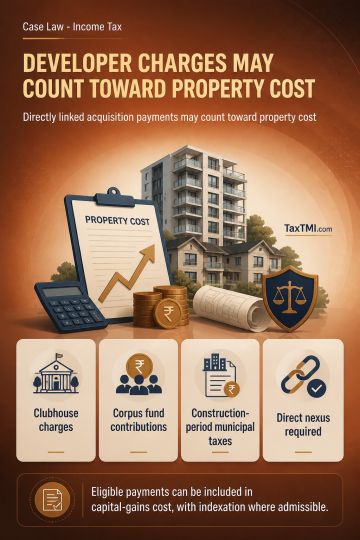
External development charges trigger TDS under section 194C, while disputed administrative payments require factual verification and fresh adjudicatio...
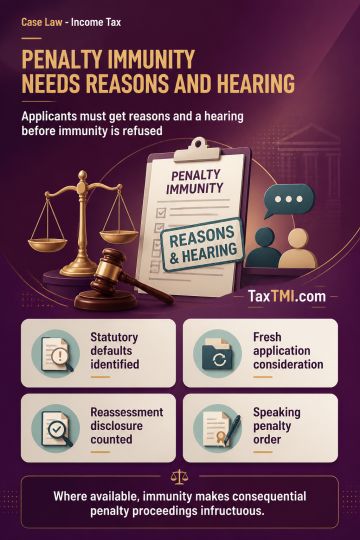
Section 270AA penalty immunity requires identified statutory defaults and a hearing before rejection; reassessment disclosure may constitute under-rep...
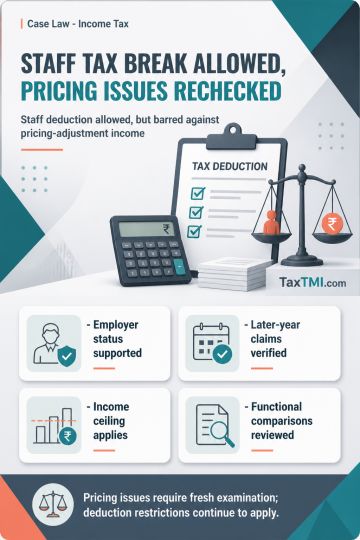
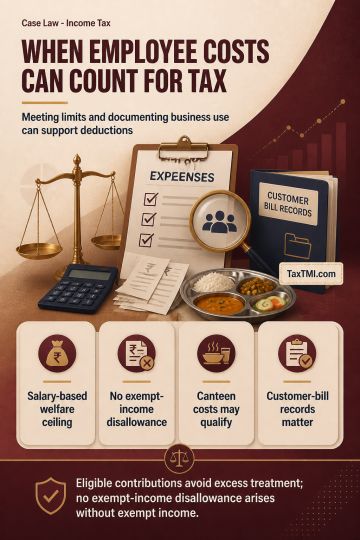
Section 80JJAA employee-cost deduction allowed for deployed staff but barred against transfer-pricing income enhancement, with pricing issues remanded...
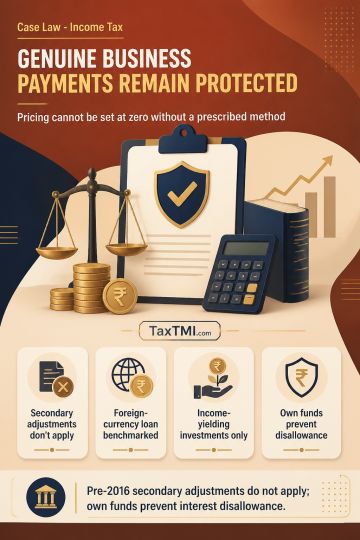
Transfer-pricing methodology protects commercially genuine associated-enterprise payments, while pre-2016 secondary adjustments and related notional i...
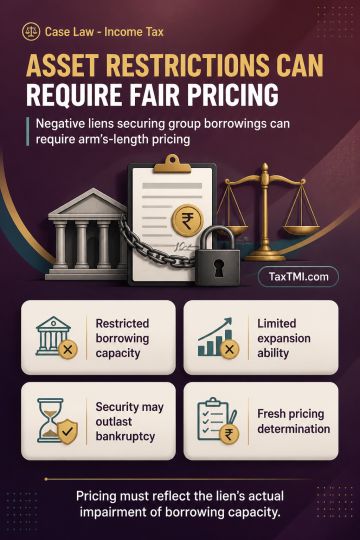
Negative liens over operating assets can constitute international transactions requiring arm's-length pricing reflecting restricted borrowing and expa...
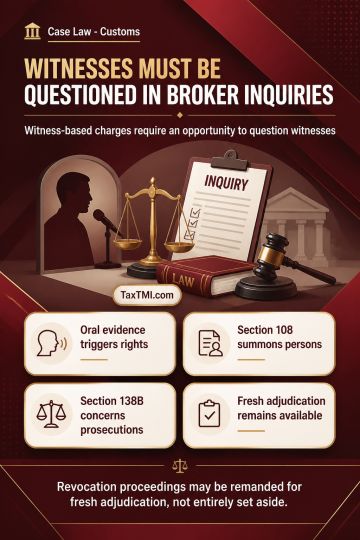
Cross-examination rights in Customs Broker revocation inquiries require witness examination; procedural denial may be cured through fresh adjudication...
Section 16(4) of the CGST Act imposes a time limit for claiming input tax credit (ITC), restricting it to the due date of filing the return for September following the relevant financial year or the annual return, whichever is earlier. This provision violates Article 14 of the Constitution by arbitrarily depriving taxpayers of their right to claim ITC despite having paid taxes to suppliers. The GST laws lack provisions for revising returns, compelling taxpayers to exercise caution in filing March returns to reconcile entries. Allowing returns with late fees but disallowing ITC amounts to double punishment. Late fees and interest already compensate the treasury and deter delays. Imposing double tax through Section 16(4) is arbitrary and capricious. As the Central Government proposes to amend Section 16 by introducing Section 118, removing the time limit condition, the Court allows the petitions without examining Section 16(4)'s constitutional validity.
Section 16(4) of the CGST Act imposes a time limit for claiming input tax credit (ITC), restricting it to the due date of filing the return for September following the relevant financial year or the annual return, whichever is earlier. This provision violates Article 14 of the Constitution by arbitrarily depriving taxpayers of their right to claim ITC despite having paid taxes to suppliers. The GST laws lack provisions for revising returns, compelling taxpayers to exercise caution in filing March returns to reconcile entries. Allowing returns with late fees but disallowing ITC amounts to double punishment. Late fees and interest already compensate the treasury and deter delays. Imposing double tax through Section 16(4) is arbitrary and capricious. As the Central Government proposes to amend Section 16 by introducing Section 118, removing the time limit condition, the Court allows the petitions without examining Section 16(4)'s constitutional validity.
Note: It is a system-generated summary and is for quick reference only.
 TaxTMI
  TaxTMI
 of 4828





 Join Channel


