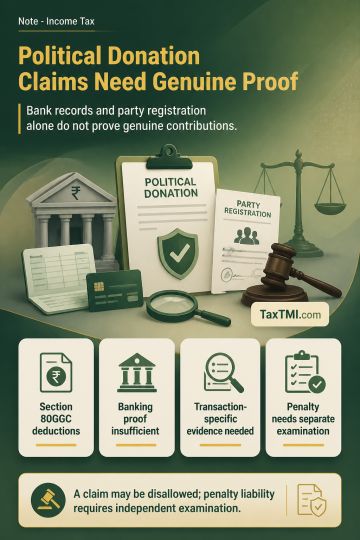
Political contribution deductions require genuine transactions; banking records and party registration alone cannot defeat evidence of accommodation e...
Post-death GST liability permits fresh proceedings against legal representatives, while discontinued-business recovery remains limited to the inherite...
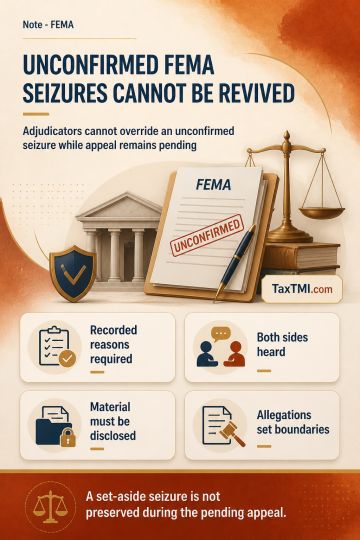
Non-confirmation of FEMA seizure prevents adjudicators from overriding pending appellate findings on recorded reasons and suspected foreign asset hold...
Penalty u/s 271(1)(c) is not leviable on additional income offered by the assessee in response to a notice issued u/s 148, as held in Kirit Dahyabhai Patel and Ravi Sud cases. Regarding the addition u/s 69 on account of a bank deposit, mere cash deposit cannot be considered the assessee's income. Failure to file an appeal does not imply admission by the assessee. Each addition cannot be the basis for levying a penalty u/s 271(1)(c) unless the Assessing Officer finds that the assessee deliberately furnished inaccurate particulars or concealed income. The assessee contended that the bank account credited with the deposit was shown in the cash book, and the deposit was not unexplained. Considering these facts, no justification exists for levying a penalty, even on the addition. The assessee's appeal is allowed.
Penalty u/s 271(1)(c) is not leviable on additional income offered by the assessee in response to a notice issued u/s 148, as held in Kirit Dahyabhai Patel and Ravi Sud cases. Regarding the addition u/s 69 on account of a bank deposit, mere cash deposit cannot be considered the assessee's income. Failure to file an appeal does not imply admission by the assessee. Each addition cannot be the basis for levying a penalty u/s 271(1)(c) unless the Assessing Officer finds that the assessee deliberately furnished inaccurate particulars or concealed income. The assessee contended that the bank account credited with the deposit was shown in the cash book, and the deposit was not unexplained. Considering these facts, no justification exists for levying a penalty, even on the addition. The assessee's appeal is allowed.
Note: It is a system-generated summary and is for quick reference only.
 TaxTMI
  TaxTMI