Defined public benefit can retain charitable character; registration renewal requires examining genuine activities and legal compliance, not surplus a...
Capital reduction is distinct from share buy-back, preventing buy-back tax; restructuring interest and related business deductions also survive scruti...
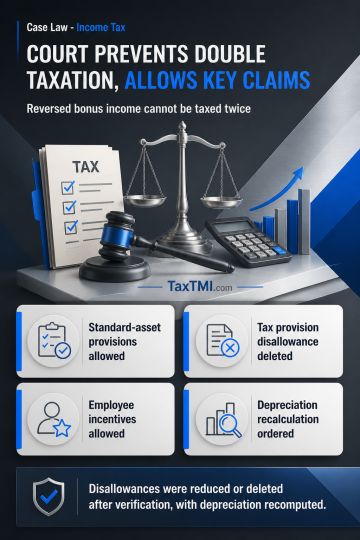
Transfer pricing and tax deductions upheld on established principles, while employee contributions and warranty provisions returned for fresh examinat...
Captive transfer pricing relies on industrial consumer tariffs, while genuine quotations can benchmark effluent treatment transfers under the Other Me...
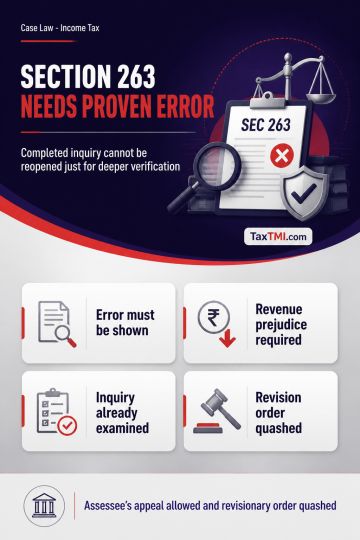
Specific tariff classification for ophthalmic instruments and extended limitation principles determine the treatment of duty demands, confiscation, an...
The case deals with the characterization of profit/receipts from the sale of land, whether it should be treated as business income or long-term capital gain. The Supreme Court in CIT vs. Madan Gopal Radhey Lal held that a trader may acquire an asset for personal purposes and hold it separate from their business stock. There is no presumption that every acquisition by a dealer is for business purposes; the intention must be determined based on the acquirer's conduct and dealings with the asset. In this case, since the assessee held the land for more than five years without developmental activity, and the Revenue accepted the treatment as long-term capital gain in preceding and succeeding years, the CIT(A)/NFAC correctly deleted the addition made by the AO, treating the profit as long-term capital gain. The Appellate Tribunal upheld this decision.
The case deals with the characterization of profit/receipts from the sale of land, whether it should be treated as business income or long-term capital gain. The Supreme Court in CIT vs. Madan Gopal Radhey Lal held that a trader may acquire an asset for personal purposes and hold it separate from their business stock. There is no presumption that every acquisition by a dealer is for business purposes; the intention must be determined based on the acquirer's conduct and dealings with the asset. In this case, since the assessee held the land for more than five years without developmental activity, and the Revenue accepted the treatment as long-term capital gain in preceding and succeeding years, the CIT(A)/NFAC correctly deleted the addition made by the AO, treating the profit as long-term capital gain. The Appellate Tribunal upheld this decision.
Note: It is a system-generated summary and is for quick reference only.
 TaxTMI
 of 4805



















 Join Channel


 TaxTMI

