Retention of seized property survives where recorded reasons support proceeds of crime, while stayed investigation periods are excluded from limitatio...
Specified income of Baddi Barotiwala Nalagarh Development Authority receives conditional tax exemption, retrospectively covering its designated assess...
Specified development authority income receives retrospective tax exemption, subject to non-commercial activity, unchanged income sources, and return-...
Unified Brand India framework introduces voluntary Trust Mark certification and funding support for export branding, packaging and global promotional ...
Origin Declaration authentication governs preferential tariff claims under India-UK CETA, requiring a validated reference number before import clearan...
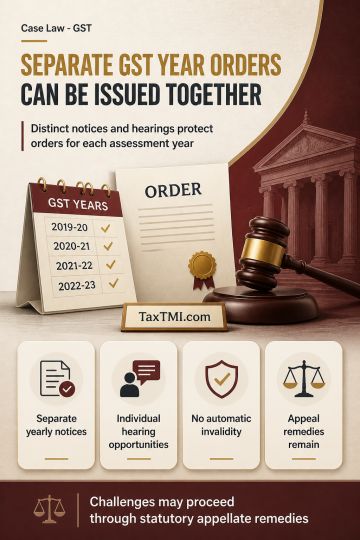
Separate assessment orders for different years remain valid when distinct notices and hearing opportunities prevent prejudice from combined proceeding...
The case deals with the characterization of profit/receipts from the sale of land, whether it should be treated as business income or long-term capital gain. The Supreme Court in CIT vs. Madan Gopal Radhey Lal held that a trader may acquire an asset for personal purposes and hold it separate from their business stock. There is no presumption that every acquisition by a dealer is for business purposes; the intention must be determined based on the acquirer's conduct and dealings with the asset. In this case, since the assessee held the land for more than five years without developmental activity, and the Revenue accepted the treatment as long-term capital gain in preceding and succeeding years, the CIT(A)/NFAC correctly deleted the addition made by the AO, treating the profit as long-term capital gain. The Appellate Tribunal upheld this decision.
The case deals with the characterization of profit/receipts from the sale of land, whether it should be treated as business income or long-term capital gain. The Supreme Court in CIT vs. Madan Gopal Radhey Lal held that a trader may acquire an asset for personal purposes and hold it separate from their business stock. There is no presumption that every acquisition by a dealer is for business purposes; the intention must be determined based on the acquirer's conduct and dealings with the asset. In this case, since the assessee held the land for more than five years without developmental activity, and the Revenue accepted the treatment as long-term capital gain in preceding and succeeding years, the CIT(A)/NFAC correctly deleted the addition made by the AO, treating the profit as long-term capital gain. The Appellate Tribunal upheld this decision.
Note: It is a system-generated summary and is for quick reference only.
 TaxTMI
 of 4805


















 Join Channel


 TaxTMI
