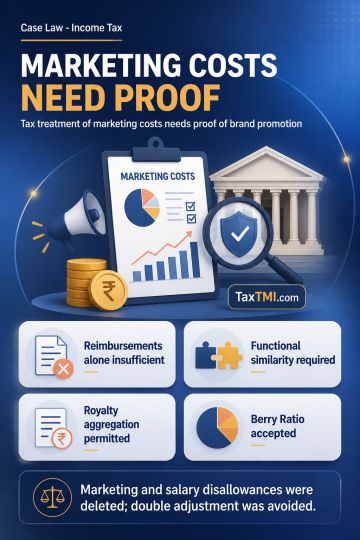
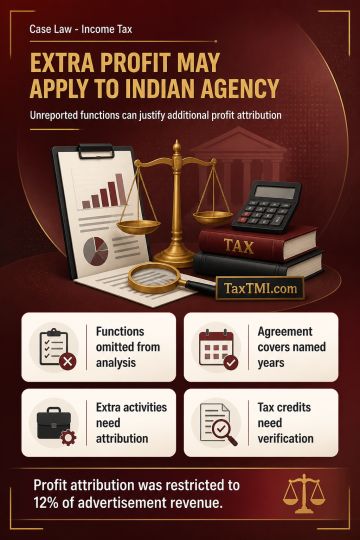
Transfer pricing requires evidence for AMP transactions, functionally reliable comparables, and appropriate aggregation or Berry Ratio benchmarking me...
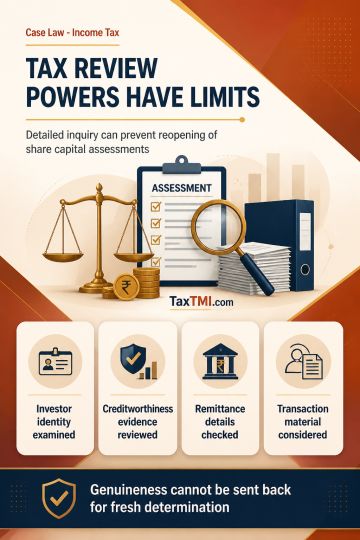
Revisionary jurisdiction cannot reopen share capital assessments where adequate inquiry supports a permissible view and no independent error is establ...
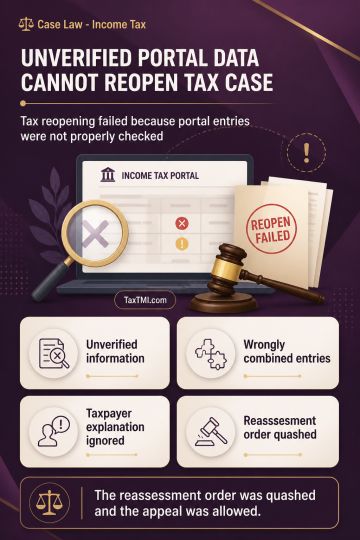
Reassessment jurisdiction fails where unverified portal information is aggregated without examining the taxpayer's explanation or relevance of entries...
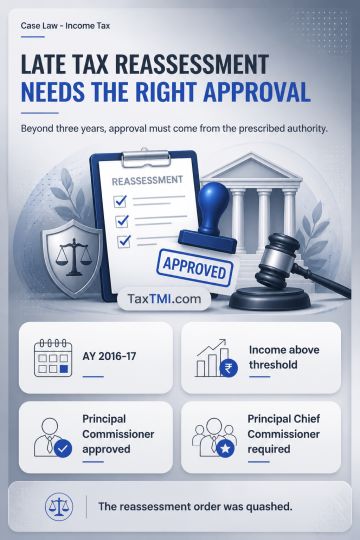
Statutory sanction for delayed reassessment requires approval from the prescribed authority; approval by an inferior authority invalidates jurisdictio...
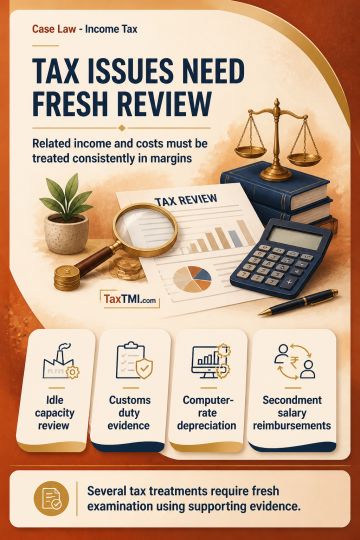
Transfer pricing margin adjustments require matching treatment of non-operating income and related costs, with comparability issues reconsidered on ev...
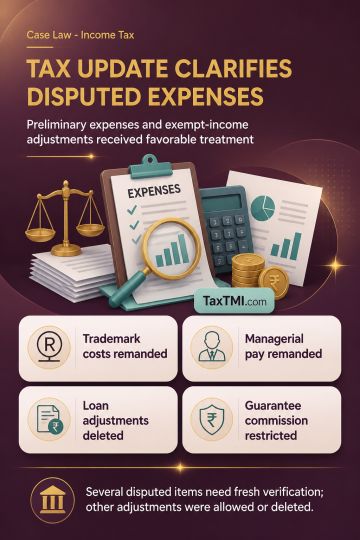
Preliminary-expense amortisation and MAT exempt-income adjustments prevailed, while trademark costs and managerial remuneration require fresh verifica...
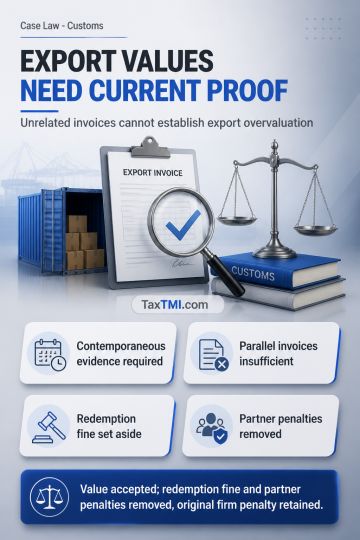
Export valuation requires contemporaneous evidence; unrelated invoices cannot prove overvaluation, and dual penalties on firm and partner are impermis...
Taxability of additional surcharge collected by a government-owned electricity distribution company from open access consumers who source electricity from private generators. The key points are: The company is exempt from filing certain GST returns and can claim input tax credit on capitalized goods/services and services for support/auxiliary supplies. It can also claim proportionate input tax credit on taxable output supplies of support services and goods like scrap. The company is eligible to claim taxes paid under reverse charge mechanism as input tax credit. The additional surcharge collected from open access consumers is to meet the fixed costs arising from the company's obligation to supply electricity as per power purchase agreements. This collection mechanism is backed by the Electricity Act, policies of the central and state governments, and regulations. The additional surcharge does not constitute consideration for tolerating an act but is collected to cover fixed costs incurred due to power purchase agreements. Therefore, it should form part of the taxable value u/s 15 of the CGST Act, 2017. However, the supply of electricity as goods or distribution of electricity as a service is exempt from GST under relevant notifications.
Taxability of additional surcharge collected by a government-owned electricity distribution company from open access consumers who source electricity from private generators. The key points are: The company is exempt from filing certain GST returns and can claim input tax credit on capitalized goods/services and services for support/auxiliary supplies. It can also claim proportionate input tax credit on taxable output supplies of support services and goods like scrap. The company is eligible to claim taxes paid under reverse charge mechanism as input tax credit. The additional surcharge collected from open access consumers is to meet the fixed costs arising from the company's obligation to supply electricity as per power purchase agreements. This collection mechanism is backed by the Electricity Act, policies of the central and state governments, and regulations. The additional surcharge does not constitute consideration for tolerating an act but is collected to cover fixed costs incurred due to power purchase agreements. Therefore, it should form part of the taxable value u/s 15 of the CGST Act, 2017. However, the supply of electricity as goods or distribution of electricity as a service is exempt from GST under relevant notifications.
Note: It is a system-generated summary and is for quick reference only.
 TaxTMI
 of 4800





 Join Channel


 TaxTMI