Defined public benefit can retain charitable character; registration renewal requires examining genuine activities and legal compliance, not surplus a...
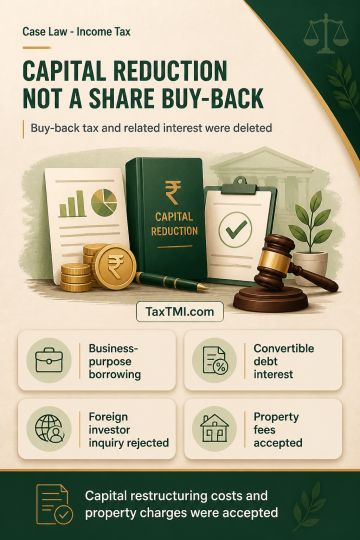
Capital reduction is distinct from share buy-back, preventing buy-back tax; restructuring interest and related business deductions also survive scruti...
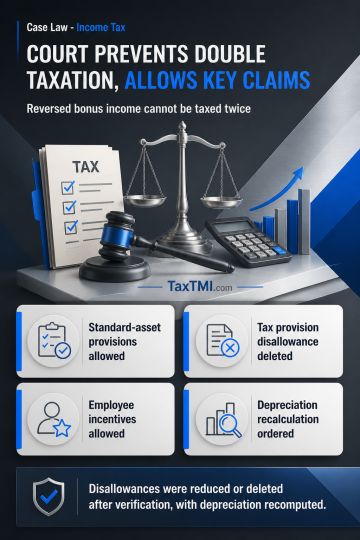
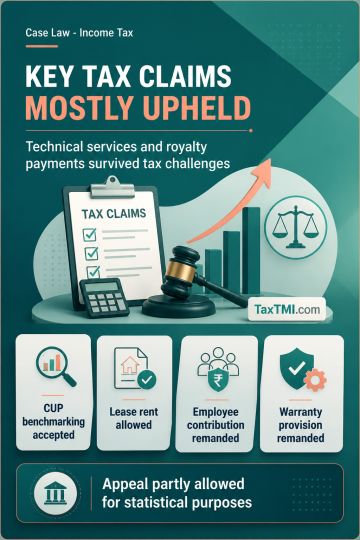
Transfer pricing and tax deductions upheld on established principles, while employee contributions and warranty provisions returned for fresh examinat...
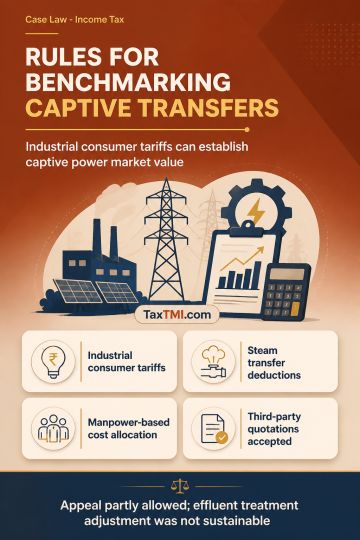
Captive transfer pricing relies on industrial consumer tariffs, while genuine quotations can benchmark effluent treatment transfers under the Other Me...
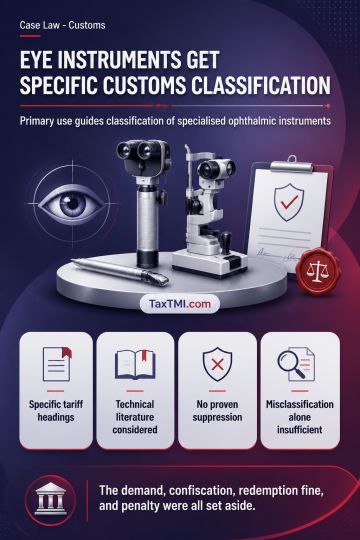
Specific tariff classification for ophthalmic instruments and extended limitation principles determine the treatment of duty demands, confiscation, an...
Taxability of additional surcharge collected by a government-owned electricity distribution company from open access consumers who source electricity from private generators. The key points are: The company is exempt from filing certain GST returns and can claim input tax credit on capitalized goods/services and services for support/auxiliary supplies. It can also claim proportionate input tax credit on taxable output supplies of support services and goods like scrap. The company is eligible to claim taxes paid under reverse charge mechanism as input tax credit. The additional surcharge collected from open access consumers is to meet the fixed costs arising from the company's obligation to supply electricity as per power purchase agreements. This collection mechanism is backed by the Electricity Act, policies of the central and state governments, and regulations. The additional surcharge does not constitute consideration for tolerating an act but is collected to cover fixed costs incurred due to power purchase agreements. Therefore, it should form part of the taxable value u/s 15 of the CGST Act, 2017. However, the supply of electricity as goods or distribution of electricity as a service is exempt from GST under relevant notifications.
Taxability of additional surcharge collected by a government-owned electricity distribution company from open access consumers who source electricity from private generators. The key points are: The company is exempt from filing certain GST returns and can claim input tax credit on capitalized goods/services and services for support/auxiliary supplies. It can also claim proportionate input tax credit on taxable output supplies of support services and goods like scrap. The company is eligible to claim taxes paid under reverse charge mechanism as input tax credit. The additional surcharge collected from open access consumers is to meet the fixed costs arising from the company's obligation to supply electricity as per power purchase agreements. This collection mechanism is backed by the Electricity Act, policies of the central and state governments, and regulations. The additional surcharge does not constitute consideration for tolerating an act but is collected to cover fixed costs incurred due to power purchase agreements. Therefore, it should form part of the taxable value u/s 15 of the CGST Act, 2017. However, the supply of electricity as goods or distribution of electricity as a service is exempt from GST under relevant notifications.
Note: It is a system-generated summary and is for quick reference only.
 TaxTMI
 of 4805




 Join Channel


 TaxTMI