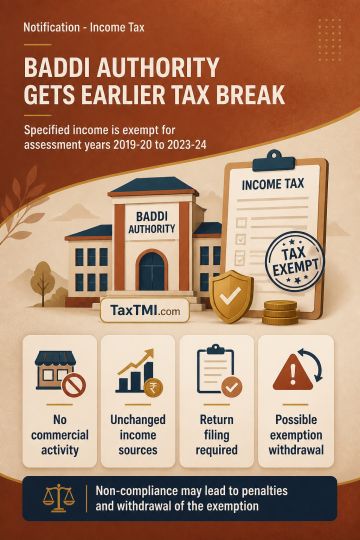
Specified development authority income receives retrospective tax exemption, subject to non-commercial activity, unchanged income sources, and return-...
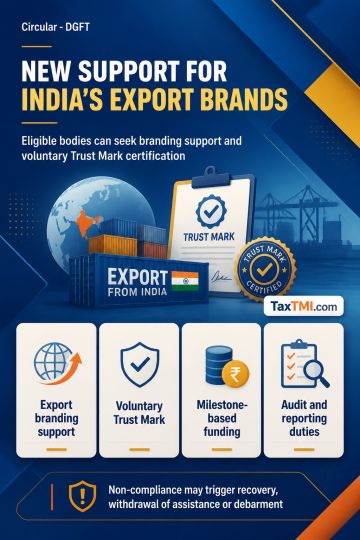
Unified Brand India framework introduces voluntary Trust Mark certification and funding support for export branding, packaging and global promotional ...
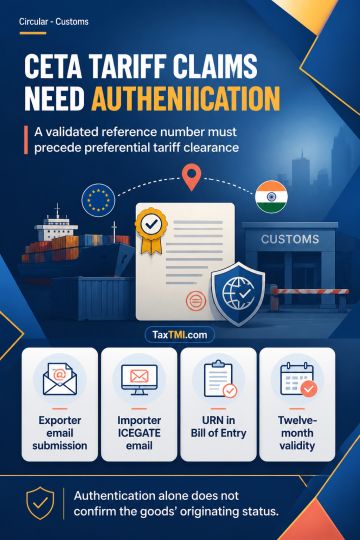
Origin Declaration authentication governs preferential tariff claims under India-UK CETA, requiring a validated reference number before import clearan...
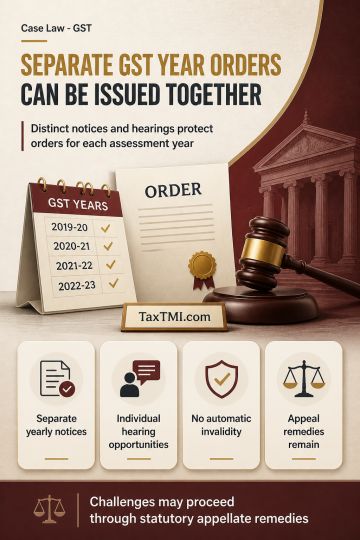
Separate assessment orders for different years remain valid when distinct notices and hearing opportunities prevent prejudice from combined proceeding...
Defined public benefit can retain charitable character; registration renewal requires examining genuine activities and legal compliance, not surplus a...
Capital reduction is distinct from share buy-back, preventing buy-back tax; restructuring interest and related business deductions also survive scruti...
The appellant imported goods declared as 'Low Aromatic White Spirit' classifiable under Customs Tariff Heading (CTH) 2710 1990, while the adjudicating authority reclassified them as 'Kerosene' under CTH 2710 1910, alleging mis-declaration. The goods were confiscated u/ss 111(m) and 111(d) of the Customs Act, 1962, for violating the Foreign Trade Policy and Petroleum Rules. The Tribunal observed that no test was conducted to determine if the goods met the requirements of 'Low Aromatic White Spirit'. It discussed the characteristics, manufacturing process, and international classification of such products under the Harmonized System Nomenclature. Based on the technical literature, the Tribunal held that the imported goods were rightly classifiable as 'Low Aromatic White Spirit' under CTH 2710 1990, not 'Kerosene'. Consequently, there was no violation of the Foreign Trade Policy or Petroleum Rules, and the goods were not liable for confiscation u/ss 111(m) and 111(d). The penalty imposed u/s 112(a)(i) was also set aside.
The appellant imported goods declared as 'Low Aromatic White Spirit' classifiable under Customs Tariff Heading (CTH) 2710 1990, while the adjudicating authority reclassified them as 'Kerosene' under CTH 2710 1910, alleging mis-declaration. The goods were confiscated u/ss 111(m) and 111(d) of the Customs Act, 1962, for violating the Foreign Trade Policy and Petroleum Rules. The Tribunal observed that no test was conducted to determine if the goods met the requirements of 'Low Aromatic White Spirit'. It discussed the characteristics, manufacturing process, and international classification of such products under the Harmonized System Nomenclature. Based on the technical literature, the Tribunal held that the imported goods were rightly classifiable as 'Low Aromatic White Spirit' under CTH 2710 1990, not 'Kerosene'. Consequently, there was no violation of the Foreign Trade Policy or Petroleum Rules, and the goods were not liable for confiscation u/ss 111(m) and 111(d). The penalty imposed u/s 112(a)(i) was also set aside.
Note: It is a system-generated summary and is for quick reference only.
 TaxTMI
 of 4805













 Join Channel


 TaxTMI
