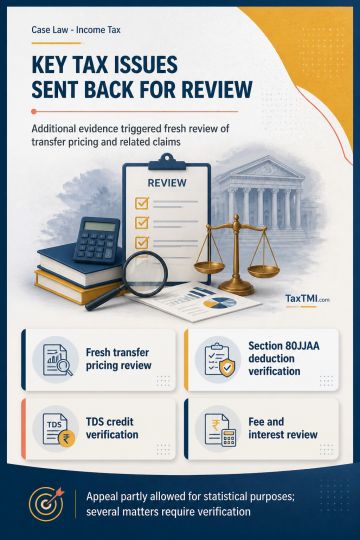
Additional evidence in transfer pricing dispute leads to fresh examination, while tax deductions, TDS credit, fee and refund interest require verifica...
Category II AIF pass-through taxation preserves non-business income character; investment receipts cannot be reclassified without applying recognised ...
Mutual fund maturity rules require proper rollover, redemption, disclosure, and due diligence; investor gains cannot excuse regulatory breaches or pen...
Threshold exemption excludes exempt services, while stamp-paper purchases avoid reverse charge; consequential service tax penalties were also set asid...
Employee conflict disclosures and investment restrictions expand with new recusal duties, post-employment limits, and compliance reporting requirement...
The Court held that the petitioner was ready and willing to perform the contract u/s 16(c) of the Specific Relief Act, having paid a substantial portion of the consideration. It was a fit case for directing specific performance u/ss 10 and 16, as compensation in money would not afford adequate relief for breach of contract to transfer immovable property. The doctrine of lis pendens u/s 52 of the Transfer of Property Act bars transfer of suit property during pendency of litigation, except under court's authority. Pendency commences from the date of institution until disposal, and the doctrine applies to third-party purchasers once the suit is instituted. The Court recalled its earlier judgment due to errors apparent on the face of record regarding limitation and specific performance, and restored the High Court's judgment, allowing the review petitions.
The Court held that the petitioner was ready and willing to perform the contract u/s 16(c) of the Specific Relief Act, having paid a substantial portion of the consideration. It was a fit case for directing specific performance u/ss 10 and 16, as compensation in money would not afford adequate relief for breach of contract to transfer immovable property. The doctrine of lis pendens u/s 52 of the Transfer of Property Act bars transfer of suit property during pendency of litigation, except under court's authority. Pendency commences from the date of institution until disposal, and the doctrine applies to third-party purchasers once the suit is instituted. The Court recalled its earlier judgment due to errors apparent on the face of record regarding limitation and specific performance, and restored the High Court's judgment, allowing the review petitions.
Note: It is a system-generated summary and is for quick reference only.
 TaxTMI
 of 4803


















 Join Channel


 TaxTMI
