Service of notice and contractual debt acknowledgment preserved insolvency admission against a corporate guarantor despite limitation and natural just...
Original works exemption excludes standalone boulder transportation, leaving subcontracted railway-project transport services subject to service tax l...
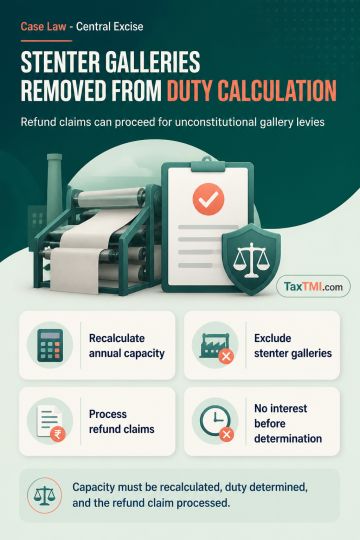
Annual production capacity determinations excluding stenter galleries support refunds for unconstitutional excise levies without an unjust-enrichment ...
Vicarious liability for cheque dishonour requires specific allegations of responsibility and cheque signatory; generic director allegations cannot sus...
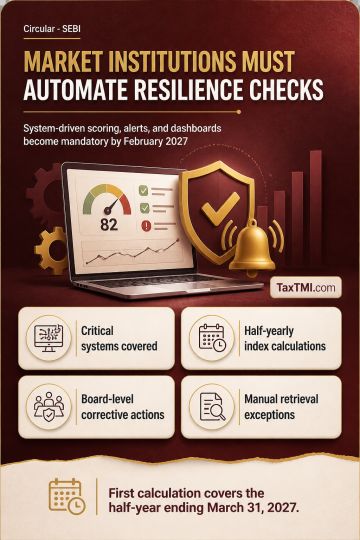
IT Resilience Index requires market infrastructure institutions to automate resilience scoring, early warnings, and continuous service-delivery monito...
Assessment order u/s 143(3) passed against an individual beneficiary, determining the primary assessee liable for taxation. The key points are: the assessment order was passed against the individual beneficiary, not the trust. Although the trust is the primary assessee u/s 160(1)(iv), the department can directly assess the beneficiary u/s 166. Since the assessment was framed against the beneficiary, the beneficiary should have filed an appeal before the CIT(Appeals), not the trust. The trust's appeal is dismissed, and the beneficiary is allowed to file a delayed appeal before the CIT(Appeals), who is directed to adopt a liberal approach regarding the delay. The issue pertains to the determination of the primary assessee liable for taxation and the unexplained cash deposits u/s 69A, where no source was provided.
Assessment order u/s 143(3) passed against an individual beneficiary, determining the primary assessee liable for taxation. The key points are: the assessment order was passed against the individual beneficiary, not the trust. Although the trust is the primary assessee u/s 160(1)(iv), the department can directly assess the beneficiary u/s 166. Since the assessment was framed against the beneficiary, the beneficiary should have filed an appeal before the CIT(Appeals), not the trust. The trust's appeal is dismissed, and the beneficiary is allowed to file a delayed appeal before the CIT(Appeals), who is directed to adopt a liberal approach regarding the delay. The issue pertains to the determination of the primary assessee liable for taxation and the unexplained cash deposits u/s 69A, where no source was provided.
Note: It is a system-generated summary and is for quick reference only.
 TaxTMI
  TaxTMI
 of 4828















 Join Channel