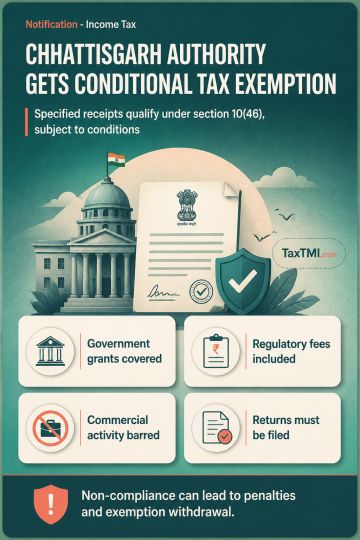
Specified regulatory authority income receives conditional tax exemption, subject to non-commercial activity, unchanged income character, and return f...
Tax exemption for regulatory authority income applies retrospectively, subject to non-commercial activity, unchanged income sources, and return-filing...
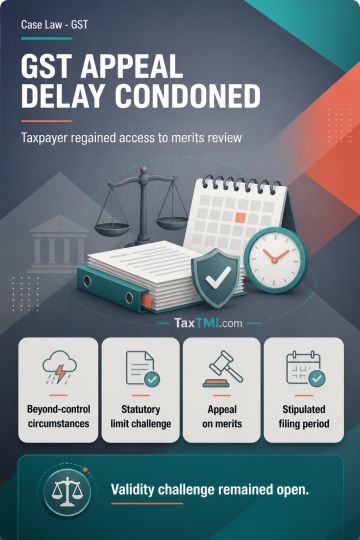
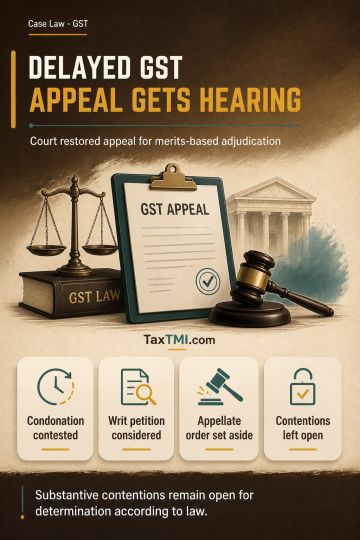
Input tax credit conditions remain constitutionally valid, with eligible recipient claims considered under GST circulars and retrospective filing dead...
Bogus donation receipts justified commission income assessment and defeated political-party tax exemption for inaccurate accounts and reporting failur...
Pure reimbursement without income element escapes tax withholding, while delayed withholding and unsupported provisions face deferred or renewed scrut...
Public benefit requirement defeats charitable registration where residents' association services are reciprocal, member-only facilities governed by mu...
The Appellate Tribunal held that the assessee is eligible to claim deduction u/s 54EC of the Income Tax Act for investment in bonds of the National Highway Authority of India (NHAI). The assessee had invested the advance money received towards the sale of a property in the specified NHAI bonds before the date of transfer. This is in line with Circular No. 359 and the Bombay High Court's decision in CIT vs. Subhash Vinayak Supnekar, which ruled that when an advance received under an agreement to sell a capital asset is invested in specified bonds, the benefit of Section 54EC is available. The Tribunal observed a direct nexus between the advance received and the investment made, thereby allowing the assessee's appeal.
The Appellate Tribunal held that the assessee is eligible to claim deduction u/s 54EC of the Income Tax Act for investment in bonds of the National Highway Authority of India (NHAI). The assessee had invested the advance money received towards the sale of a property in the specified NHAI bonds before the date of transfer. This is in line with Circular No. 359 and the Bombay High Court's decision in CIT vs. Subhash Vinayak Supnekar, which ruled that when an advance received under an agreement to sell a capital asset is invested in specified bonds, the benefit of Section 54EC is available. The Tribunal observed a direct nexus between the advance received and the investment made, thereby allowing the assessee's appeal.
Note: It is a system-generated summary and is for quick reference only.
 TaxTMI
 of 4801
















 Join Channel


 TaxTMI
