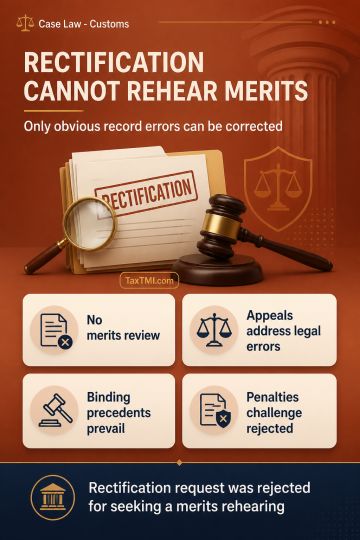
Rectification of mistake remains limited to self-evident record errors, preventing merits review through miscellaneous applications and preserving fin...
Tender creditworthiness conditions may extend to de facto Promoter Directors, with post-participation challenges generally barred absent arbitrariness...
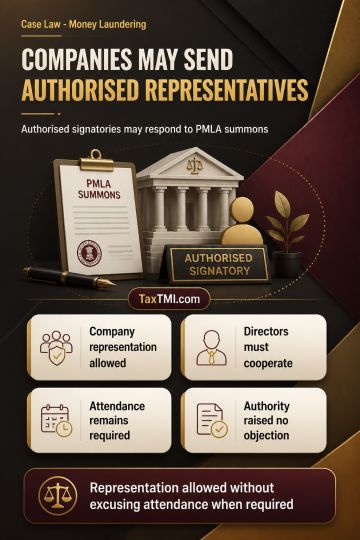
Corporate representation in PMLA summons proceedings permitted through an authorised signatory, subject to directors' continuing cooperation and atten...
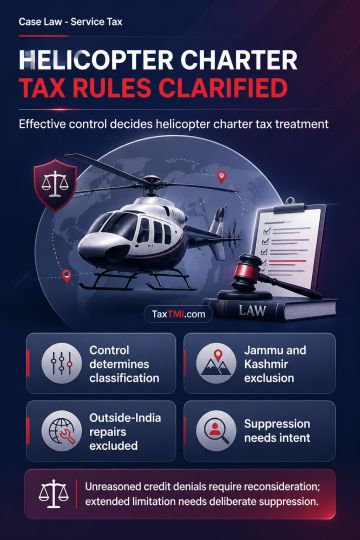
Helicopter charter classification requires effective control analysis, while territorial performance, reasoned credit orders and wilful suppression de...
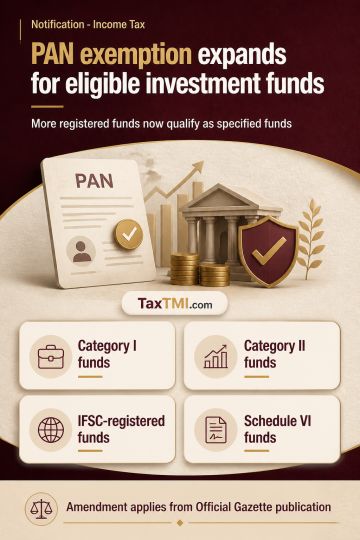
Specified fund definition expands PAN exemption eligibility for registered alternative investment funds and qualifying International Financial Service...
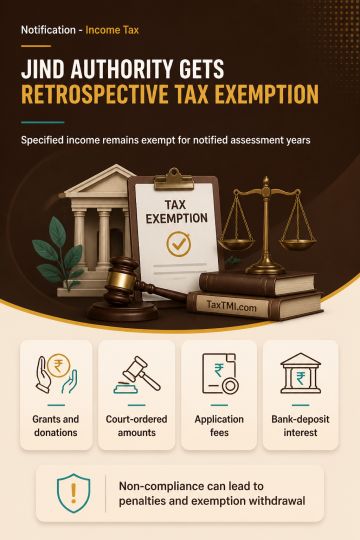
Tax exemption for specified legal-services authority income applies retrospectively, subject to non-commercial activity, unchanged income sources, and...
The appellants imported 251.300 MTs of re-rollable scrap on a high sea sales basis and classified it under CTH 7214 1090 as re-rollable scrap. However, the Department treated it as defectives and seconds, denying the benefit of Customs Notification No. 12/2012-Cus. The Tribunal held that seconds and defective steel products refer to non-standard dimensions or downgraded products with surface defects and internal faults. If the imported cargo is meant for sale as defective or second goods, the notification benefit can be denied. Since there was no allegation or finding that the appellants disposed of the cargo as such, and considering they are manufacturers regularly importing scrap for melting and re-rolling, the imported cargo cannot be treated as seconds and defectives. Therefore, the appellants are eligible for the concessional rate of duty under Notification No. 12/2012-Cus. at Sl.No. 330.
The appellants imported 251.300 MTs of re-rollable scrap on a high sea sales basis and classified it under CTH 7214 1090 as re-rollable scrap. However, the Department treated it as defectives and seconds, denying the benefit of Customs Notification No. 12/2012-Cus. The Tribunal held that seconds and defective steel products refer to non-standard dimensions or downgraded products with surface defects and internal faults. If the imported cargo is meant for sale as defective or second goods, the notification benefit can be denied. Since there was no allegation or finding that the appellants disposed of the cargo as such, and considering they are manufacturers regularly importing scrap for melting and re-rolling, the imported cargo cannot be treated as seconds and defectives. Therefore, the appellants are eligible for the concessional rate of duty under Notification No. 12/2012-Cus. at Sl.No. 330.
Note: It is a system-generated summary and is for quick reference only.
 TaxTMI
 of 4803





 Join Channel


 TaxTMI