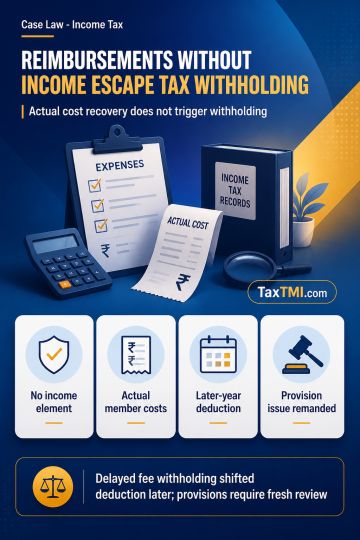
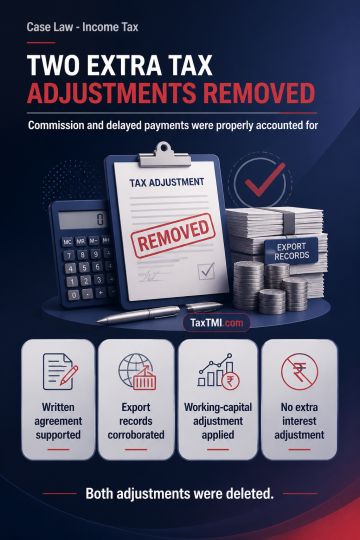
Pure reimbursement without income element escapes tax withholding, while delayed withholding and unsupported provisions face deferred or renewed scrut...
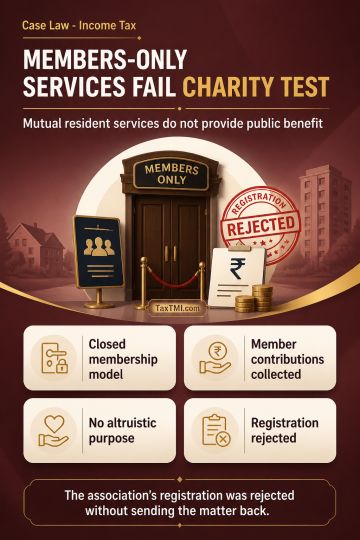
Public benefit requirement defeats charitable registration where residents' association services are reciprocal, member-only facilities governed by mu...
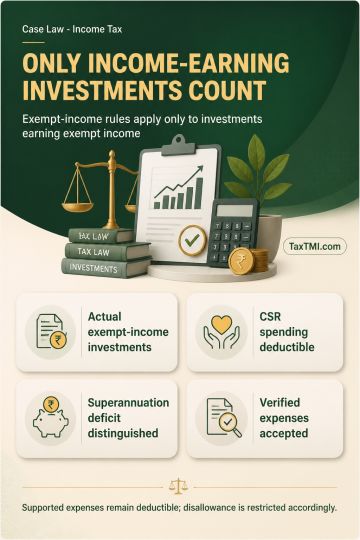
Exempt-income expenditure disallowance is confined to investments that actually generated exempt income, while supported business expenses remain dedu...
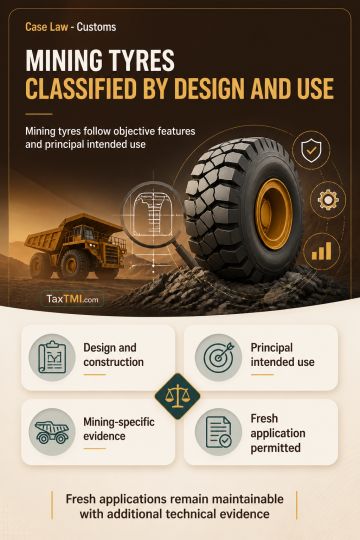
Objective characteristics and principal use govern mining-tyre classification, while fresh advance ruling applications may rely on additional technica...
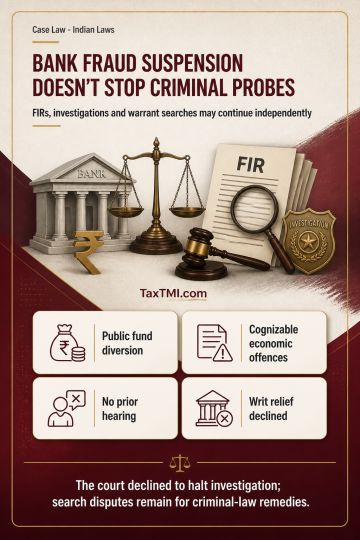
Administrative fraud classification suspension does not halt independent criminal investigation or warrant-based searches into alleged economic offenc...
Page of 4801
Press 'Enter' after typing page number.
761 to 780 of 96001 Results
❮
❯
❯❯
0 / 200
Expand Note
Add to Folder
No Folders have been created
+
Are you sure you want to delete "My most important" ?
The appellants imported 251.300 MTs of re-rollable scrap on a high sea sales basis and classified it under CTH 7214 1090 as re-rollable scrap. However, the Department treated it as defectives and seconds, denying the benefit of Customs Notification No. 12/2012-Cus. The Tribunal held that seconds and defective steel products refer to non-standard dimensions or downgraded products with surface defects and internal faults. If the imported cargo is meant for sale as defective or second goods, the notification benefit can be denied. Since there was no allegation or finding that the appellants disposed of the cargo as such, and considering they are manufacturers regularly importing scrap for melting and re-rolling, the imported cargo cannot be treated as seconds and defectives. Therefore, the appellants are eligible for the concessional rate of duty under Notification No. 12/2012-Cus. at Sl.No. 330.
The appellants imported 251.300 MTs of re-rollable scrap on a high sea sales basis and classified it under CTH 7214 1090 as re-rollable scrap. However, the Department treated it as defectives and seconds, denying the benefit of Customs Notification No. 12/2012-Cus. The Tribunal held that seconds and defective steel products refer to non-standard dimensions or downgraded products with surface defects and internal faults. If the imported cargo is meant for sale as defective or second goods, the notification benefit can be denied. Since there was no allegation or finding that the appellants disposed of the cargo as such, and considering they are manufacturers regularly importing scrap for melting and re-rolling, the imported cargo cannot be treated as seconds and defectives. Therefore, the appellants are eligible for the concessional rate of duty under Notification No. 12/2012-Cus. at Sl.No. 330.
Note: It is a system-generated summary and is for quick reference only.
 TaxTMI
 of 4801



 Join Channel


 TaxTMI