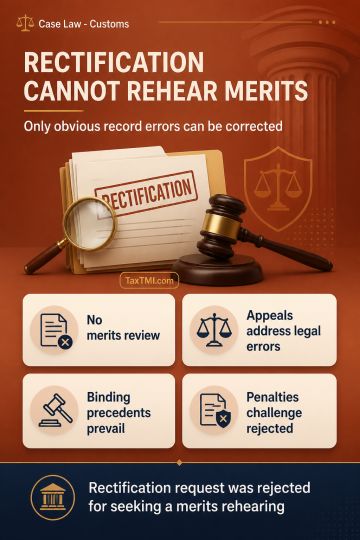
Rectification of mistake remains limited to self-evident record errors, preventing merits review through miscellaneous applications and preserving fin...
Tender creditworthiness conditions may extend to de facto Promoter Directors, with post-participation challenges generally barred absent arbitrariness...
Corporate representation in PMLA summons proceedings permitted through an authorised signatory, subject to directors' continuing cooperation and atten...
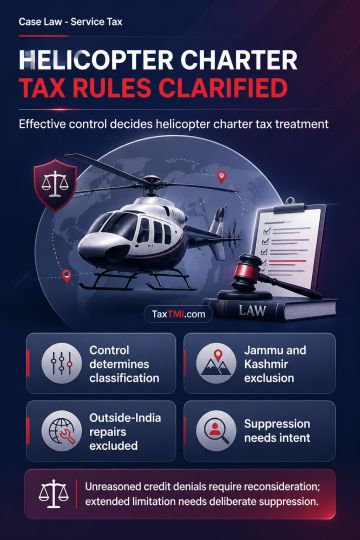
Helicopter charter classification requires effective control analysis, while territorial performance, reasoned credit orders and wilful suppression de...
Specified fund definition expands PAN exemption eligibility for registered alternative investment funds and qualifying International Financial Service...
Tax exemption for specified legal-services authority income applies retrospectively, subject to non-commercial activity, unchanged income sources, and...
This case deals with the maintainability of appeals filed by the Airports Economic Regulatory Authority (AERA) against orders of the Telecom Disputes Settlement and Appellate Tribunal (TDSAT) u/s 31 of the AERA Act. The key points are: AERA has a statutory duty to regulate tariffs for aeronautical services, considering various factors to ensure economically viable airports without compromising public interest. As AERA is interested in preserving public interest concerns animating the statute, it is a necessary party in appeals against its tariff orders before TDSAT. While judicial/quasi-judicial authorities are generally not impleaded as respondents in appeals against their orders, this principle is not absolute. The evolution of the fairness doctrine has transcended boundaries, and all administrative actions must comply with natural justice principles. Section 31 does not expressly confer the power to appeal on any party. However, at a minimum, parties to the appeal before the first appellate body (TDSAT) have the right to file an appeal before the Supreme Court. Since AERA is a necessary party before TDSAT, it can file appeals u/s 31. Consequently, the appeals filed by AERA against TDSAT orders u/s 31 of the AERA Act are maintainable.
This case deals with the maintainability of appeals filed by the Airports Economic Regulatory Authority (AERA) against orders of the Telecom Disputes Settlement and Appellate Tribunal (TDSAT) u/s 31 of the AERA Act. The key points are: AERA has a statutory duty to regulate tariffs for aeronautical services, considering various factors to ensure economically viable airports without compromising public interest. As AERA is interested in preserving public interest concerns animating the statute, it is a necessary party in appeals against its tariff orders before TDSAT. While judicial/quasi-judicial authorities are generally not impleaded as respondents in appeals against their orders, this principle is not absolute. The evolution of the fairness doctrine has transcended boundaries, and all administrative actions must comply with natural justice principles. Section 31 does not expressly confer the power to appeal on any party. However, at a minimum, parties to the appeal before the first appellate body (TDSAT) have the right to file an appeal before the Supreme Court. Since AERA is a necessary party before TDSAT, it can file appeals u/s 31. Consequently, the appeals filed by AERA against TDSAT orders u/s 31 of the AERA Act are maintainable.
Note: It is a system-generated summary and is for quick reference only.
 TaxTMI
 of 4803














 Join Channel


 TaxTMI