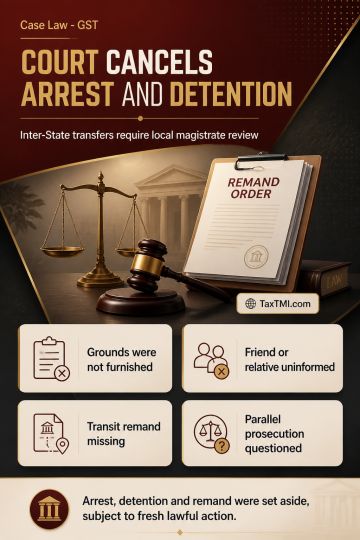
Arrest safeguards and transit remand requirements invalidated detention following inter-State transfer without communicated grounds or magistrate auth...
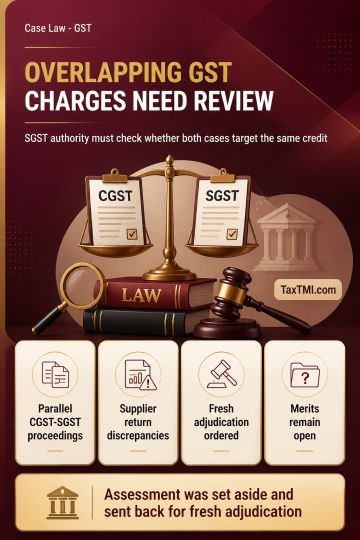
Arrest safeguards require disclosed grounds, relative intimation and transit remand, while duplicate prosecution under the CGST framework is unsustain...
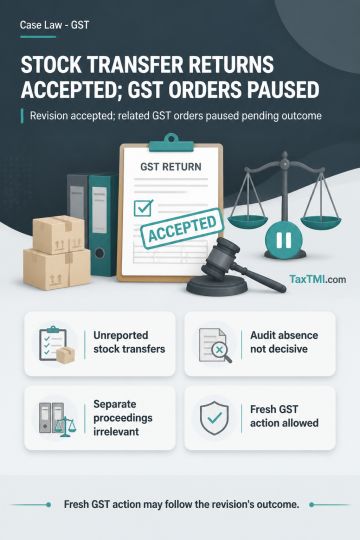
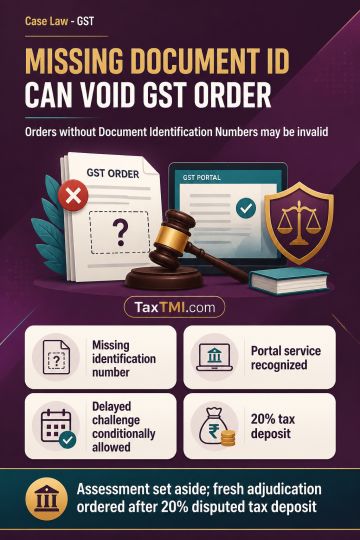
Document Identification Number defects can invalidate GST assessments, with delayed challenges entertained conditionally where patent irregularities e...
Windmill commissioning evidence supported higher depreciation where grid connection and electricity generation proved operational use before the relev...
This case deals with the maintainability of appeals filed by the Airports Economic Regulatory Authority (AERA) against orders of the Telecom Disputes Settlement and Appellate Tribunal (TDSAT) u/s 31 of the AERA Act. The key points are: AERA has a statutory duty to regulate tariffs for aeronautical services, considering various factors to ensure economically viable airports without compromising public interest. As AERA is interested in preserving public interest concerns animating the statute, it is a necessary party in appeals against its tariff orders before TDSAT. While judicial/quasi-judicial authorities are generally not impleaded as respondents in appeals against their orders, this principle is not absolute. The evolution of the fairness doctrine has transcended boundaries, and all administrative actions must comply with natural justice principles. Section 31 does not expressly confer the power to appeal on any party. However, at a minimum, parties to the appeal before the first appellate body (TDSAT) have the right to file an appeal before the Supreme Court. Since AERA is a necessary party before TDSAT, it can file appeals u/s 31. Consequently, the appeals filed by AERA against TDSAT orders u/s 31 of the AERA Act are maintainable.
This case deals with the maintainability of appeals filed by the Airports Economic Regulatory Authority (AERA) against orders of the Telecom Disputes Settlement and Appellate Tribunal (TDSAT) u/s 31 of the AERA Act. The key points are: AERA has a statutory duty to regulate tariffs for aeronautical services, considering various factors to ensure economically viable airports without compromising public interest. As AERA is interested in preserving public interest concerns animating the statute, it is a necessary party in appeals against its tariff orders before TDSAT. While judicial/quasi-judicial authorities are generally not impleaded as respondents in appeals against their orders, this principle is not absolute. The evolution of the fairness doctrine has transcended boundaries, and all administrative actions must comply with natural justice principles. Section 31 does not expressly confer the power to appeal on any party. However, at a minimum, parties to the appeal before the first appellate body (TDSAT) have the right to file an appeal before the Supreme Court. Since AERA is a necessary party before TDSAT, it can file appeals u/s 31. Consequently, the appeals filed by AERA against TDSAT orders u/s 31 of the AERA Act are maintainable.
Note: It is a system-generated summary and is for quick reference only.
 TaxTMI
 of 4801













 Join Channel


 TaxTMI