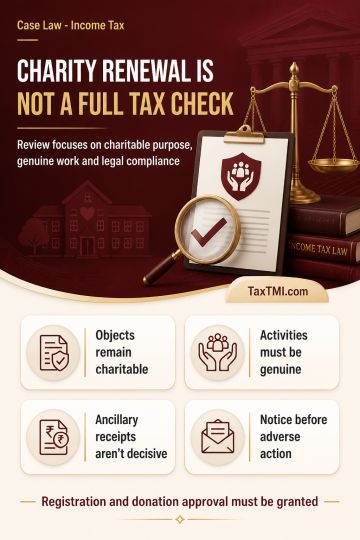
Charitable registration renewal cannot become an assessment of receipts, profitability or annual exemption compliance, requiring renewal and donation ...
AMP expenditure for own business is not an international transaction without an associated-enterprise arrangement, eliminating transfer pricing adjust...
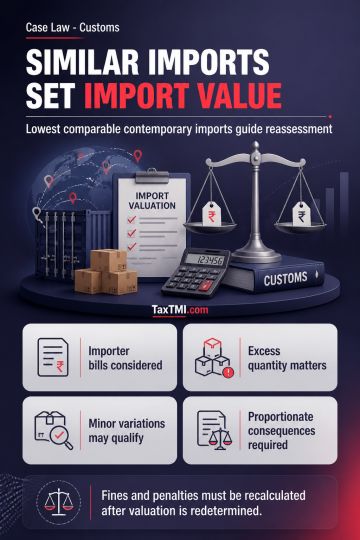
Customs valuation must use comparable contemporary imports, while confiscation fines and penalties require proportionate recalculation on reassessed v...
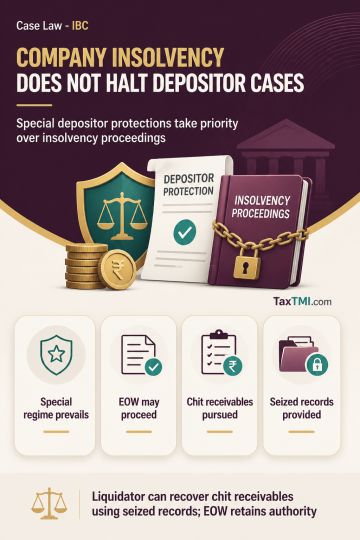
Depositor-protection proceedings prevail over corporate insolvency, while liquidators may recover chit receivables using copies of seized company reco...
The High Court held that the Income Tax Department cannot demand TDS amounts from employees when such amounts have been deducted from their salaries by the employer but not deposited with the government. Section 205 of the Income Tax Act bars raising demand against assessees to the extent tax has been deducted from their income. The object is that when the obligation to deposit tax lies with the employer, the liability cannot be shifted to the employee who is the beneficiary of the payment. Issuing demand notices against the employees for the TDS amounts not deposited by the employer is impermissible and violates Section 205. The writ petition was allowed.
The High Court held that the Income Tax Department cannot demand TDS amounts from employees when such amounts have been deducted from their salaries by the employer but not deposited with the government. Section 205 of the Income Tax Act bars raising demand against assessees to the extent tax has been deducted from their income. The object is that when the obligation to deposit tax lies with the employer, the liability cannot be shifted to the employee who is the beneficiary of the payment. Issuing demand notices against the employees for the TDS amounts not deposited by the employer is impermissible and violates Section 205. The writ petition was allowed.
Note: It is a system-generated summary and is for quick reference only.
 TaxTMI
  TaxTMI
 of 4819










 Join Channel


