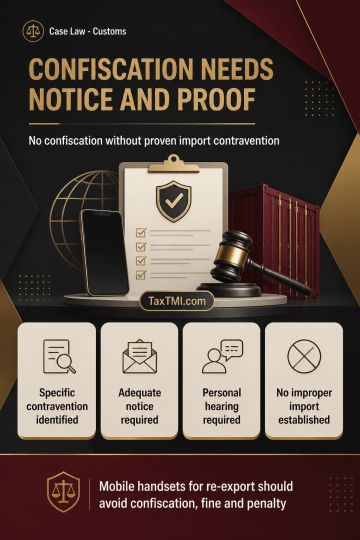
Arrest safeguards require disclosed grounds, relative intimation and transit remand, while duplicate prosecution under the CGST framework is unsustain...
Document Identification Number defects can invalidate GST assessments, with delayed challenges entertained conditionally where patent irregularities e...
Windmill commissioning evidence supported higher depreciation where grid connection and electricity generation proved operational use before the relev...
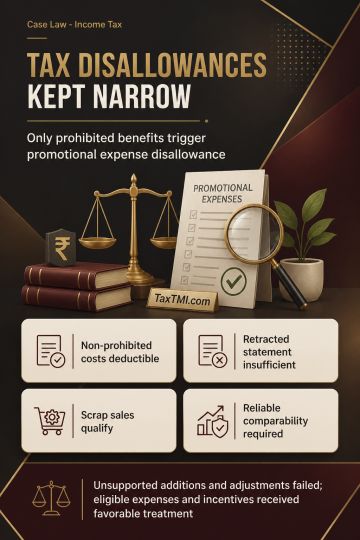
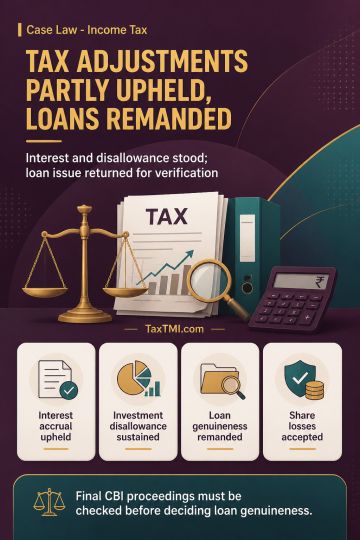
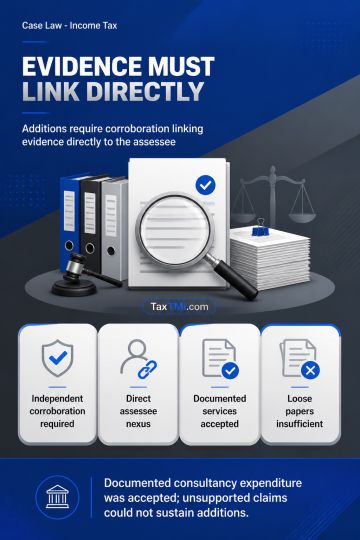
Pharmaceutical promotion and transfer-pricing comparability principles limited disallowances, while uncorroborated search allegations and unsupported ...
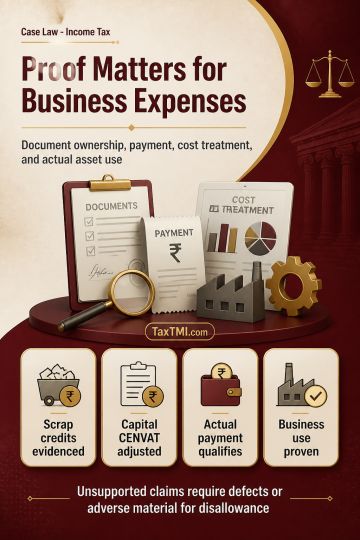
Business expenditure substantiation supports scrap credits, statutory payments and expense claims, while depreciation requires proof of actual busines...
This is a summary of a legal case related to the dishonor of a cheque. The court held that the accused failed to rebut the presumption of consideration for the cheque by providing satisfactory evidence. The accused did not dispute taking the loan, issuing the cheque, or their signature on the cheque. The burden shifted to the accused to rebut the presumption that the cheque was issued in discharge of a legal liability, which they failed to do. The accused also failed to pay the amount within 15 days of receiving the court summons, precluding them from claiming non-receipt of notice. The court upheld the trial court's sentence, including a fine of twice the cheque amount along with 9% simple interest per annum as compensation, as it was not excessive given the legal expenses and loss of interest incurred by the complainant over the three-year period.
This is a summary of a legal case related to the dishonor of a cheque. The court held that the accused failed to rebut the presumption of consideration for the cheque by providing satisfactory evidence. The accused did not dispute taking the loan, issuing the cheque, or their signature on the cheque. The burden shifted to the accused to rebut the presumption that the cheque was issued in discharge of a legal liability, which they failed to do. The accused also failed to pay the amount within 15 days of receiving the court summons, precluding them from claiming non-receipt of notice. The court upheld the trial court's sentence, including a fine of twice the cheque amount along with 9% simple interest per annum as compensation, as it was not excessive given the legal expenses and loss of interest incurred by the complainant over the three-year period.
Note: It is a system-generated summary and is for quick reference only.
 TaxTMI
 of 4805









 Join Channel


 TaxTMI