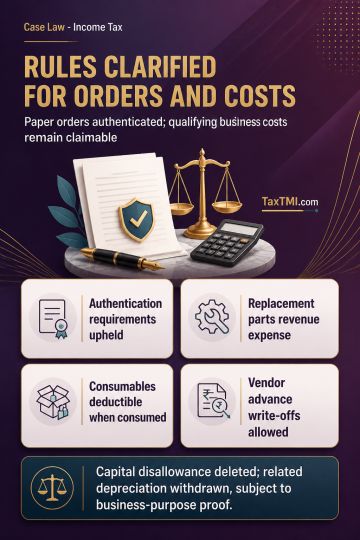
Authentication of paper assessment orders upheld, while qualifying repairs, consumables and vendor advance write-offs remain deductible business claim...
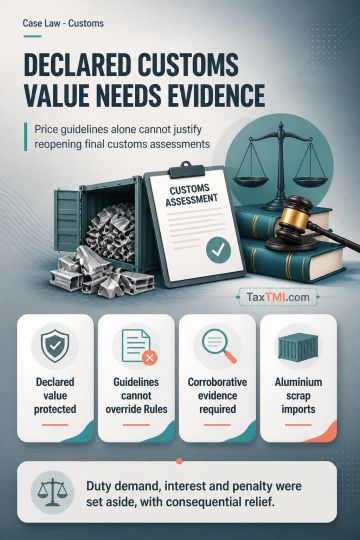
Transaction value cannot be rejected solely on non-statutory valuation guidelines without corroborative evidence supporting reassessment of final cust...
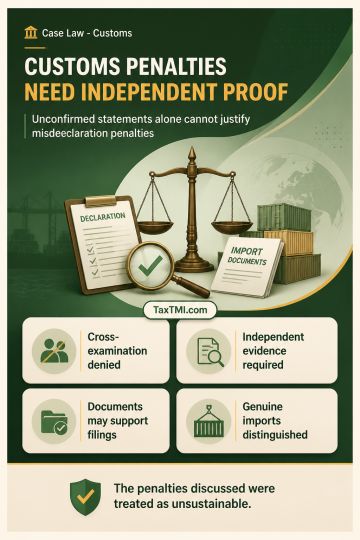
Cross-examination rights and corroborated evidence limit customs penalties for misdeclaration in genuine import transactions involving documented clea...
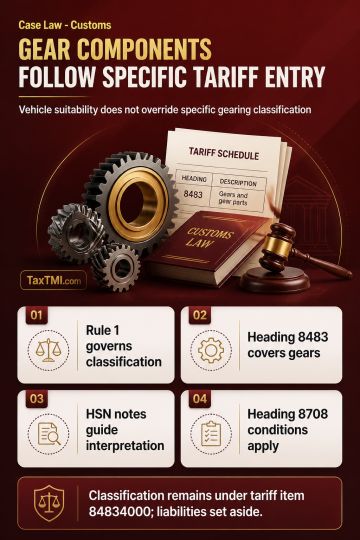
Tariff classification of vehicle gear components follows the specific gearing entry, displacing motor-vehicle parts classification and related liabili...
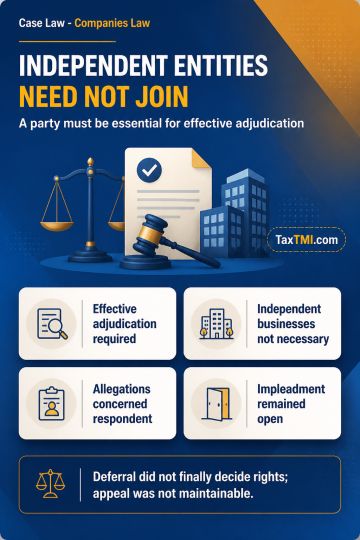
Necessary-party requirements limit impleadment of independent entities, while deferred consideration does not create an appealable adverse determinati...
This is a summary of a legal case related to the dishonor of a cheque. The court held that the accused failed to rebut the presumption of consideration for the cheque by providing satisfactory evidence. The accused did not dispute taking the loan, issuing the cheque, or their signature on the cheque. The burden shifted to the accused to rebut the presumption that the cheque was issued in discharge of a legal liability, which they failed to do. The accused also failed to pay the amount within 15 days of receiving the court summons, precluding them from claiming non-receipt of notice. The court upheld the trial court's sentence, including a fine of twice the cheque amount along with 9% simple interest per annum as compensation, as it was not excessive given the legal expenses and loss of interest incurred by the complainant over the three-year period.
This is a summary of a legal case related to the dishonor of a cheque. The court held that the accused failed to rebut the presumption of consideration for the cheque by providing satisfactory evidence. The accused did not dispute taking the loan, issuing the cheque, or their signature on the cheque. The burden shifted to the accused to rebut the presumption that the cheque was issued in discharge of a legal liability, which they failed to do. The accused also failed to pay the amount within 15 days of receiving the court summons, precluding them from claiming non-receipt of notice. The court upheld the trial court's sentence, including a fine of twice the cheque amount along with 9% simple interest per annum as compensation, as it was not excessive given the legal expenses and loss of interest incurred by the complainant over the three-year period.
Note: It is a system-generated summary and is for quick reference only.
 TaxTMI
 of 4803






 Join Channel


 TaxTMI
