Charitable trust registration requires a specified-violation notice; settled cash deposits and related-party payments did not justify cancellation or ...
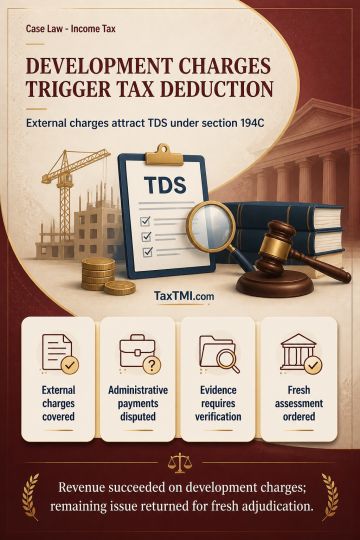
External development charges trigger TDS under section 194C, while disputed administrative payments require factual verification and fresh adjudicatio...
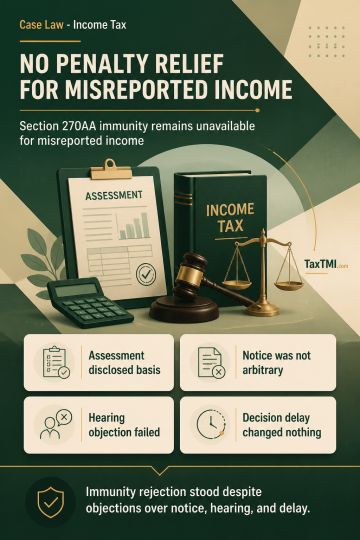
Section 270AA penalty immunity requires identified statutory defaults and a hearing before rejection; reassessment disclosure may constitute under-rep...
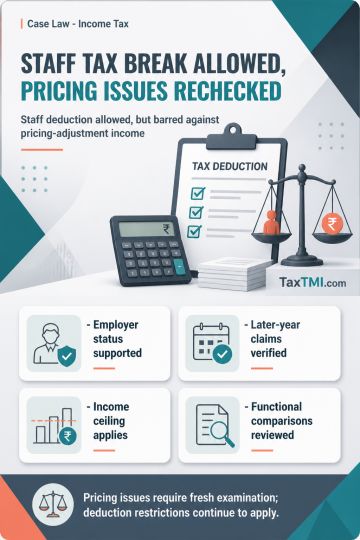
Section 80JJAA employee-cost deduction allowed for deployed staff but barred against transfer-pricing income enhancement, with pricing issues remanded...
Page of 4830
Press 'Enter' after typing page number.
141 to 160 of 96587 Results
❮
❯
❯❯
0 / 200
Expand Note
Add to Folder
No Folders have been created
+
Are you sure you want to delete "My most important" ?
Suit decreed partially for recovery, doctrine of lis pendens applied. Agreement dated 17.08.1990 not found fraudulent or result of collusion between plaintiff and defendant no. 1. Trial court's finding on issue no. 5 not challenged by defendants through cross-appeal or objections. First Appellate Court erred in finding agreement collusive without cross-objections. Doctrine of lis pendens u/s 52 of Transfer of Property Act, 1882 applies to alienation during pendency of suit, irrespective of notice to alienee. Sale deed executed on 08.01.1993 by defendant no. 1 in favor of defendant no. 2 during pendency of suit filed on 24.12.1992. Plaintiff non-suited on ground of defendant no. 2 being bona fide purchaser without notice, contrary to doctrine of lis pendens. High Court justified in setting aside Trial Court and First Appellate Court judgments, decreeing specific performance. Supreme Court affirmed High Court judgment, dismissed appeal.
Suit decreed partially for recovery, doctrine of lis pendens applied. Agreement dated 17.08.1990 not found fraudulent or result of collusion between plaintiff and defendant no. 1. Trial court's finding on issue no. 5 not challenged by defendants through cross-appeal or objections. First Appellate Court erred in finding agreement collusive without cross-objections. Doctrine of lis pendens u/s 52 of Transfer of Property Act, 1882 applies to alienation during pendency of suit, irrespective of notice to alienee. Sale deed executed on 08.01.1993 by defendant no. 1 in favor of defendant no. 2 during pendency of suit filed on 24.12.1992. Plaintiff non-suited on ground of defendant no. 2 being bona fide purchaser without notice, contrary to doctrine of lis pendens. High Court justified in setting aside Trial Court and First Appellate Court judgments, decreeing specific performance. Supreme Court affirmed High Court judgment, dismissed appeal.
Note: It is a system-generated summary and is for quick reference only.
 TaxTMI
  TaxTMI
 of 4830




















 Join Channel


