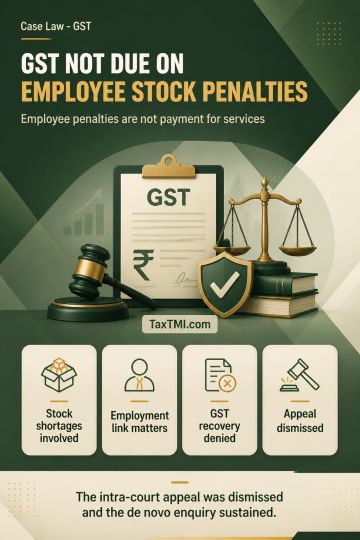
Employee stock-shortage penalties do not constitute consideration for services, preventing GST collection under Schedule II in employment relationship...
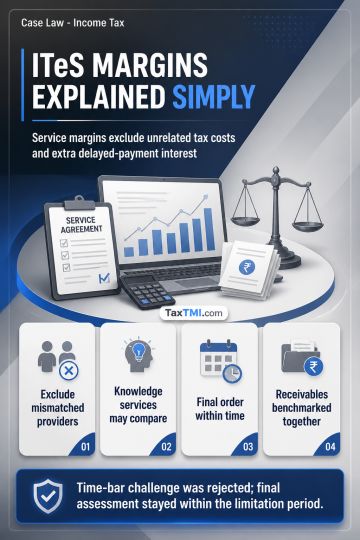
Transfer-pricing treatment of ITeS margins excludes pass-through tax recoveries and separate delayed-receivables interest after working-capital adjust...
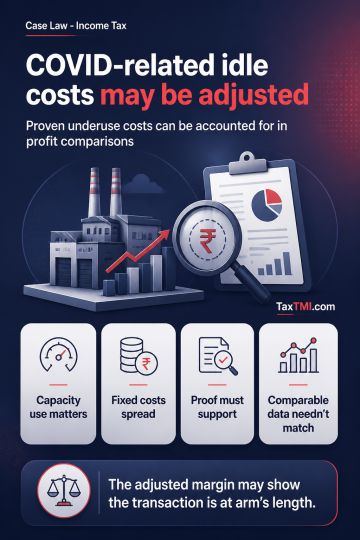
Capacity-utilisation adjustments under TNMM can neutralise substantiated COVID-related idle costs where underutilisation materially affects profitabil...
Page of 4830
Press 'Enter' after typing page number.
181 to 200 of 96587 Results
❮
❯
❯❯
0 / 200
Expand Note
Add to Folder
No Folders have been created
+
Are you sure you want to delete "My most important" ?
The court examined the validity of search and seizure u/s 132, focusing on the scope of Revenue's power and the "reasons to believe" requirement. It held that the 'satisfaction note' lacked material relating to discrete inquiry and information gathered, failing to reflect the basis for believing the petitioners would not disclose possession of money. The court distinguished "reasons to believe" from "reasons to suspect," emphasizing that the competent authority must have cogent incriminating material prior to seizure to record satisfaction. Mere suspicion or unexplained possession of amount cannot justify action u/s 132. Consequently, the impugned search and seizure was set aside, and the seized amount ordered to be returned, without precluding further lawful proceedings against the petitioners.
The court examined the validity of search and seizure u/s 132, focusing on the scope of Revenue's power and the "reasons to believe" requirement. It held that the 'satisfaction note' lacked material relating to discrete inquiry and information gathered, failing to reflect the basis for believing the petitioners would not disclose possession of money. The court distinguished "reasons to believe" from "reasons to suspect," emphasizing that the competent authority must have cogent incriminating material prior to seizure to record satisfaction. Mere suspicion or unexplained possession of amount cannot justify action u/s 132. Consequently, the impugned search and seizure was set aside, and the seized amount ordered to be returned, without precluding further lawful proceedings against the petitioners.
Note: It is a system-generated summary and is for quick reference only.
 TaxTMI
  TaxTMI
 of 4830



 Join Channel


