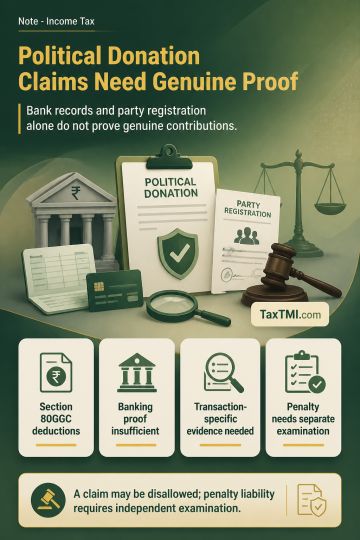
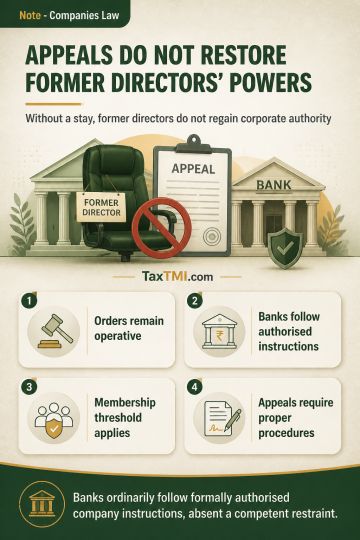
Political contribution deductions require genuine transactions; banking records and party registration alone cannot defeat evidence of accommodation e...
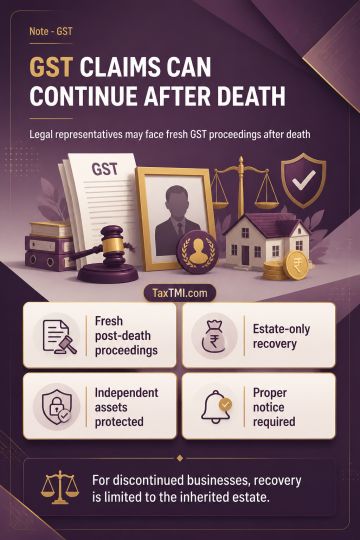
Post-death GST liability permits fresh proceedings against legal representatives, while discontinued-business recovery remains limited to the inherite...
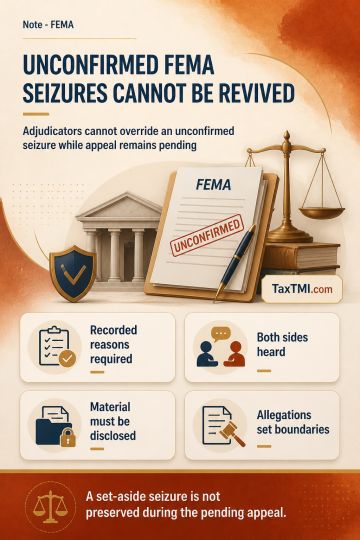
Non-confirmation of FEMA seizure prevents adjudicators from overriding pending appellate findings on recorded reasons and suspected foreign asset hold...
The court examined the validity of search and seizure u/s 132, focusing on the scope of Revenue's power and the "reasons to believe" requirement. It held that the 'satisfaction note' lacked material relating to discrete inquiry and information gathered, failing to reflect the basis for believing the petitioners would not disclose possession of money. The court distinguished "reasons to believe" from "reasons to suspect," emphasizing that the competent authority must have cogent incriminating material prior to seizure to record satisfaction. Mere suspicion or unexplained possession of amount cannot justify action u/s 132. Consequently, the impugned search and seizure was set aside, and the seized amount ordered to be returned, without precluding further lawful proceedings against the petitioners.
The court examined the validity of search and seizure u/s 132, focusing on the scope of Revenue's power and the "reasons to believe" requirement. It held that the 'satisfaction note' lacked material relating to discrete inquiry and information gathered, failing to reflect the basis for believing the petitioners would not disclose possession of money. The court distinguished "reasons to believe" from "reasons to suspect," emphasizing that the competent authority must have cogent incriminating material prior to seizure to record satisfaction. Mere suspicion or unexplained possession of amount cannot justify action u/s 132. Consequently, the impugned search and seizure was set aside, and the seized amount ordered to be returned, without precluding further lawful proceedings against the petitioners.
Note: It is a system-generated summary and is for quick reference only.
 TaxTMI
  TaxTMI