Inherited property sale proceeds require capital-gains treatment where ownership is supported by evidence, not suspicion or unverified signature doubt...
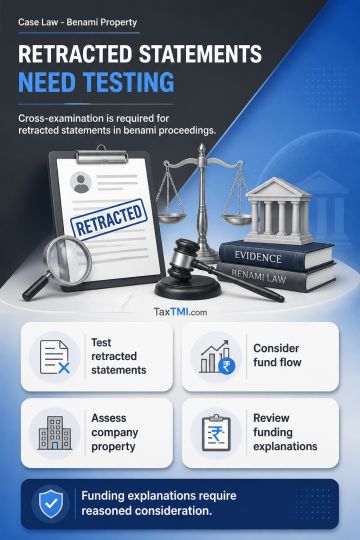
Cross-examination of retracted statements is essential where foundational evidence supports a benami allegation and documented funding explanations re...
Capital-goods exemption covers plant-modernisation accessories, while the import restriction applies only to earlier capital-goods components and spar...
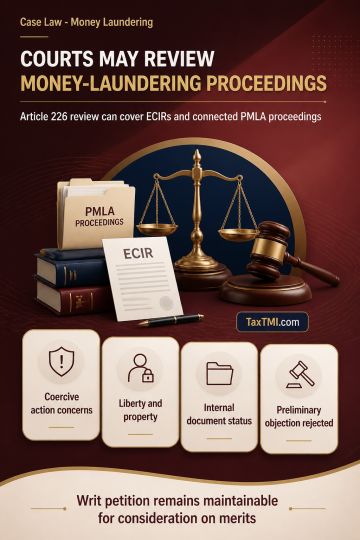
Constitutional judicial review permits challenges to ECIRs and connected money-laundering proceedings where coercive action affects fundamental intere...
The assessee's contribution to the Employees Group Gratuity Scheme was disallowed solely due to it being paid to an unapproved Gratuity Fund. However, it was held that the approval granted to the erstwhile company's Gratuity Fund automatically vested with the assessee upon the change of name. Therefore, the assessee was entitled to deduct the expenditure towards the contribution made to the Employees Gratuity Fund. Regarding the transfer pricing adjustment on interest on outstanding receivables from Associated Enterprises (AEs), it was held that the ratio laid down in the Delhi Tribunal case applied. The assessee's margin being significantly higher than the comparables, the adjustment had no basis. The argument that interest on outstanding receivables cannot be considered an international transaction was dismissed due to the amendment in Explanation 1(c) of Section 92B. Consequently, the ground raised by the assessee was allowed.
The assessee's contribution to the Employees Group Gratuity Scheme was disallowed solely due to it being paid to an unapproved Gratuity Fund. However, it was held that the approval granted to the erstwhile company's Gratuity Fund automatically vested with the assessee upon the change of name. Therefore, the assessee was entitled to deduct the expenditure towards the contribution made to the Employees Gratuity Fund. Regarding the transfer pricing adjustment on interest on outstanding receivables from Associated Enterprises (AEs), it was held that the ratio laid down in the Delhi Tribunal case applied. The assessee's margin being significantly higher than the comparables, the adjustment had no basis. The argument that interest on outstanding receivables cannot be considered an international transaction was dismissed due to the amendment in Explanation 1(c) of Section 92B. Consequently, the ground raised by the assessee was allowed.
Note: It is a system-generated summary and is for quick reference only.
 TaxTMI
 of 4786

















 Join Channel


 TaxTMI