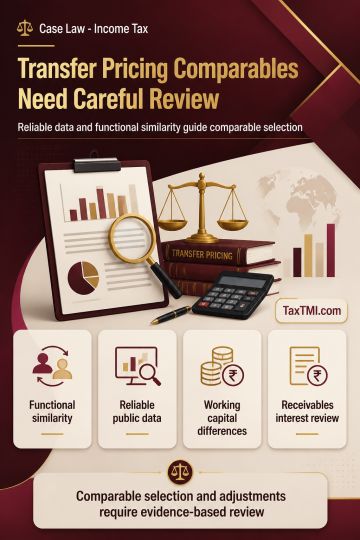
Transfer pricing comparability requires functional alignment, reliable financial data, and careful review of working capital and receivables adjustmen...
Transfer pricing rules require benchmarking corporate guarantees and associated-enterprise advances, while invalid domestic-transaction adjustments ca...
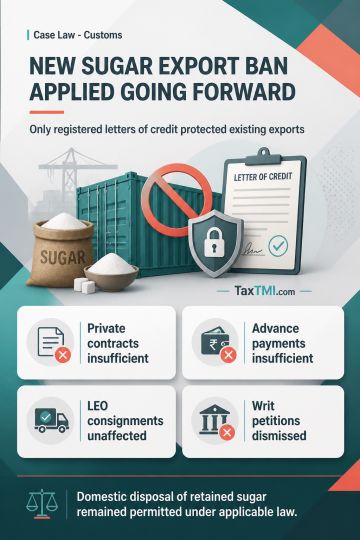
Prospective sugar export prohibition required registered letters of credit; private contracts and export quotas created no enforceable continuation ri...
Retroactive interim-moratorium exclusion permits protective asset disclosure and preservation measures against personal guarantors pending arbitration...
The assessee's contribution to the Employees Group Gratuity Scheme was disallowed solely due to it being paid to an unapproved Gratuity Fund. However, it was held that the approval granted to the erstwhile company's Gratuity Fund automatically vested with the assessee upon the change of name. Therefore, the assessee was entitled to deduct the expenditure towards the contribution made to the Employees Gratuity Fund. Regarding the transfer pricing adjustment on interest on outstanding receivables from Associated Enterprises (AEs), it was held that the ratio laid down in the Delhi Tribunal case applied. The assessee's margin being significantly higher than the comparables, the adjustment had no basis. The argument that interest on outstanding receivables cannot be considered an international transaction was dismissed due to the amendment in Explanation 1(c) of Section 92B. Consequently, the ground raised by the assessee was allowed.
The assessee's contribution to the Employees Group Gratuity Scheme was disallowed solely due to it being paid to an unapproved Gratuity Fund. However, it was held that the approval granted to the erstwhile company's Gratuity Fund automatically vested with the assessee upon the change of name. Therefore, the assessee was entitled to deduct the expenditure towards the contribution made to the Employees Gratuity Fund. Regarding the transfer pricing adjustment on interest on outstanding receivables from Associated Enterprises (AEs), it was held that the ratio laid down in the Delhi Tribunal case applied. The assessee's margin being significantly higher than the comparables, the adjustment had no basis. The argument that interest on outstanding receivables cannot be considered an international transaction was dismissed due to the amendment in Explanation 1(c) of Section 92B. Consequently, the ground raised by the assessee was allowed.
Note: It is a system-generated summary and is for quick reference only.
 TaxTMI
 of 4788













 Join Channel


 TaxTMI